




### The Shifting Strategy of Giga Shanghai: From Local Hub to Global Export Engine
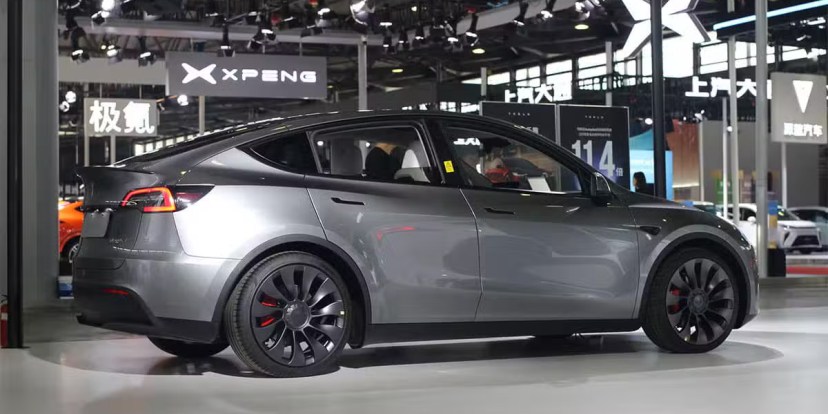
When Tesla first broke ground in the marshy terrain of Lingang in 2019, the narrative was clear: Elon Musk envisioned a facility dedicated exclusively to the Chinese domestic market. The goal was to provide local drivers with affordable, locally manufactured electric vehicles. However, as we move through the first half of 2026, that foundational promise has undergone a significant transformation, revealing a much more complex global strategy.
#### Production Milestones vs. Domestic Reality
Recent data released by the China Passenger Car Association (CPCA) paints a fascinating, albeit contradictory, picture of Tesla’s operations in China. On the surface, the manufacturing output is nothing short of stellar. During the first six months of 2026, Giga Shanghai churned out 467,949 vehicles. This figure represents a robust 28% increase compared to the same period last year, placing the facility within a hair’s breadth-just 2%-of its historical production peak achieved in 2023.
While these numbers suggest a factory operating at the height of its efficiency, they mask a growing disconnect between production volume and local market penetration. The sheer scale of output is no longer a reflection of Chinese consumer demand alone; instead, it highlights how the facility has evolved into a critical export hub for the rest of the world.
#### A Global Pivot
The reality is that Giga Shanghai has pivoted from being a “China-for-China” manufacturer to a vital cog in Tesla’s international supply chain. As competition within China’s domestic EV sector intensifies-with local giants like BYD and Xiaomi aggressively capturing market share-Tesla has increasingly relied on its Shanghai plant to feed demand in Europe, Southeast Asia, and beyond.
This shift mirrors the strategy of other global manufacturers who utilize China’s mature supply chain infrastructure to maintain competitive pricing in foreign markets. By leveraging the high-volume, low-cost manufacturing environment of Lingang, Tesla is effectively subsidizing its global expansion, even as its dominance on its “home turf” in China faces unprecedented pressure from domestic rivals.