




Columbia Pictures
The Unlikely Pairing: A Powerhouse Duo Meets a Perfectionist Visionary
Throughout the late 1960s and well into the 1990s, Dustin Hoffman was a thrillingly versatile movie star whose range was virtually unmatched. Whether he was anchoring a poignant drama or delivering sharp comedic timing, Hoffman possessed a rare ability to vanish into his roles. His performance in “Tootsie” remains a masterclass in character transformation, proving he could balance vulnerability with sharp wit. During this era, studios viewed him as a “golden ticket”-a performer whose presence practically guaranteed both critical acclaim and massive commercial returns.
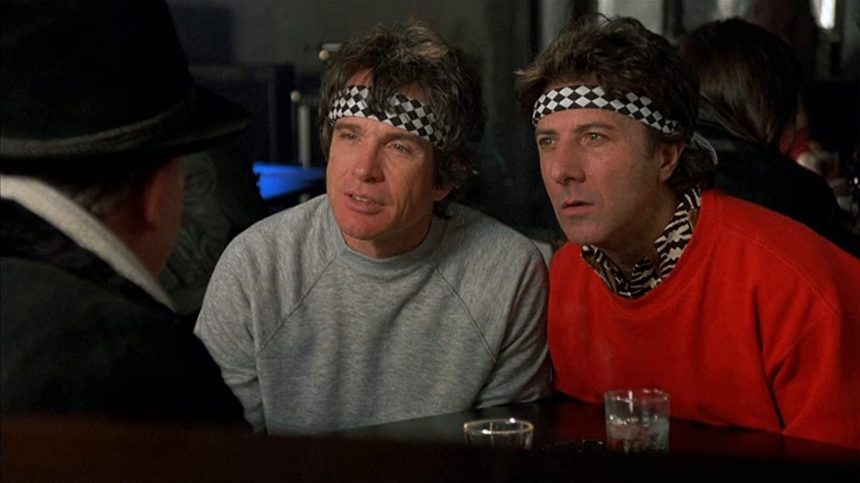
The stage was set for a cinematic event when Warren Beatty, another titan of the industry, sought to repay a creative debt. Having benefited from the brilliant script doctoring of writer-director Elaine May on projects like “Heaven Can Wait” and “Reds”-the latter of which earned Beatty the Academy Award for Best Director-he was eager to produce her next feature. By securing Hoffman as his co-star, Beatty believed he had assembled a foolproof recipe for a box-office smash.
The High-Stakes Gamble of Elaine May
However, the production was shadowed by May’s notorious reputation. While she was widely respected as a visionary filmmaker, her process was famously exhaustive. She was known for a perfectionist streak that often led to ballooning budgets and an astronomical amount of raw footage. In an industry where time is money, May’s tendency to obsess over every frame made her a high-risk, high-reward gamble for any studio.
While “Ishtar” is often remembered as a cautionary tale of 1980s excess, modern reappraisals suggest that the film is far more than its reputation as a commercial disaster. Much like how “Waterworld” eventually found its audience after being labeled a failure, “Ishtar” has been reclaimed by cinephiles who appreciate its dry, character-driven humor. Despite the initial narrative of a “legendary flop,” the film stands as a testament to the ambition of its stars and the singular, uncompromising voice of its director.