



Addressing Cultural Misappropriation on the Miss Universe Canada Stage
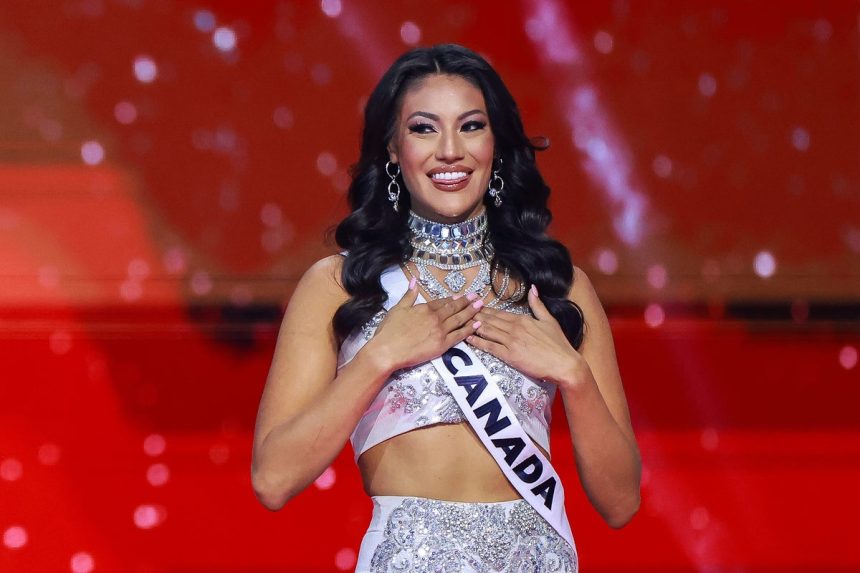
The 2024 Miss Universe Canada pageant recently became the center of a significant controversy, forcing a temporary halt to the proceedings. Ashley Callingbull, the reigning Miss Universe Canada 2024, took a firm stand during the live broadcast to confront an instance of cultural appropriation that occurred during the preliminary rounds.
A Stand for Indigenous Representation
During the August 8 event, the 36-year-old Plains Cree activist and titleholder made history as the first Indigenous woman to win the crown. Her tenure has been defined by a commitment to advocacy, which culminated in a powerful moment on stage. Just as pageant director Sonny Borrelli prepared to reveal the top 20 finalists, Callingbull stepped in to address the audience directly.
Reflecting on her journey, Callingbull emphasized the gravity of her position: “Being the first First Nations Miss Universe Canada has been the honor of a lifetime. Achieving this dream was a milestone I worked toward for years.” However, she noted that her pride was overshadowed by recent events that required immediate accountability.
The Incident: Costume Competition Controversy
The controversy stemmed from the national costume segment held on August 4. During this portion of the competition, contestants Karisa Haverkamp and Jasleen Kaily appeared in attire that drew heavily from Indigenous regalia. For many, the use of such sacred symbols as mere fashion accessories is a painful reminder of the historical exploitation of Indigenous cultures.
Callingbull, who viewed the footage of the costumes after the fact, felt compelled to speak out. “Mistakes were made, and I felt it was necessary to acknowledge them,” she stated in a viral social media clip. “I witnessed cultural appropriation directed at Indigenous peoples during the national costume round, and I could not let that pass without comment.”
The Broader Impact of Cultural Sensitivity
This incident highlights a growing tension in global pageantry regarding the line between cultural appreciation and appropriation. In an era where diversity and inclusion are increasingly prioritized, organizations are under greater pressure to vet costumes and ensure that participants respect the origins of the garments they wear. According to recent industry reports, pageant organizations are now facing stricter scrutiny from advocacy groups, with many calling for mandatory cultural sensitivity training for both contestants and designers to prevent the trivialization of heritage.