




Snapdragon 8 Gen 6 Pro: Early Benchmarks Hint at Incremental Gains
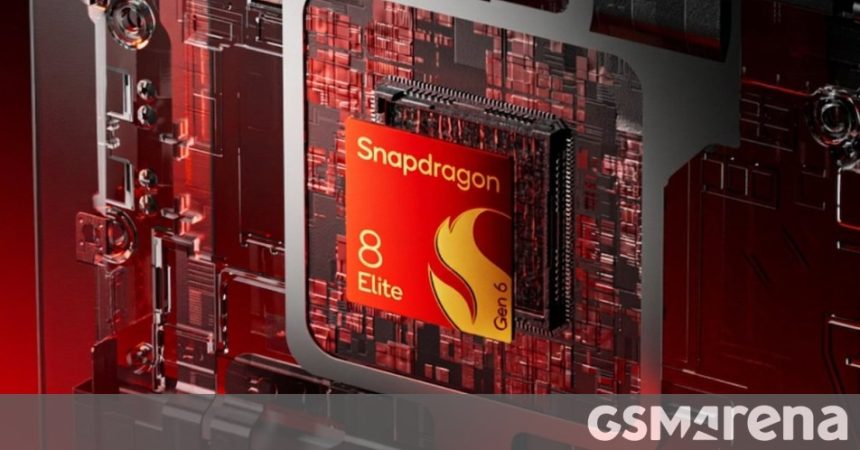
Anticipation is building for the upcoming Snapdragon Summit, where Qualcomm is slated to pull the curtain back on its latest flagship silicon, the Snapdragon 8 Gen 6 Pro. While the official reveal is scheduled for next month, early performance data has already surfaced via an AnTuTu 11 benchmark leak.
Performance Metrics and Initial Impressions
The chipset, identified by the internal model number SM8975, posted a staggering score of 4.83 million points in the synthetic test. To put this into perspective, the current Snapdragon 8 Elite Gen 5 typically operates within the 4 to 4.6 million range.
At first glance, this suggests a modest 5% performance uplift. However, industry analysts advise caution regarding these figures. Since these results likely stem from pre-production hardware, the final retail performance could see significant optimization before the chips reach consumer devices.
Architectural Shifts and Manufacturing Speculation
The Snapdragon 8 Gen 6 series is expected to arrive in two distinct tiers: a standard model and the high-performance “Pro” variant. A major point of discussion remains the manufacturing node; while a 2nm process is widely anticipated, it is still unclear whether Qualcomm will partner with TSMC or leverage Samsung’s foundry services for production.
Under the hood, both iterations are rumored to utilize a sophisticated 2+3+3 configuration of the next-generation Oryon CPU cores. The graphical heavy lifting will be handled by different GPU architectures:
* Standard Model: Equipped with the Adreno 845 GPU, supported by 12MB of dedicated on-chip graphics memory.
* Pro Model: Features the more robust Adreno 850 GPU, bolstered by an increased 18MB of on-chip graphics memory, likely providing a substantial edge in high-fidelity mobile gaming and intensive rendering tasks.
As the mobile industry shifts toward more efficient 2nm architectures, the focus is moving beyond raw benchmark scores toward sustained thermal efficiency and AI-driven task management. We will have a clearer picture of how these chips stack up against the competition once the official specifications are unveiled at the summit.