




# The Future of Air Travel: How Biometrics Are Replacing Physical Passports
The traditional ritual of fumbling for your passport at a customs checkpoint is rapidly becoming an artifact of the past. As facial recognition technology matures, U.S. aviation hubs are pivoting toward a seamless, touchless experience that prioritizes speed and efficiency over paper documentation.
## A Shift Toward Frictionless Border Control
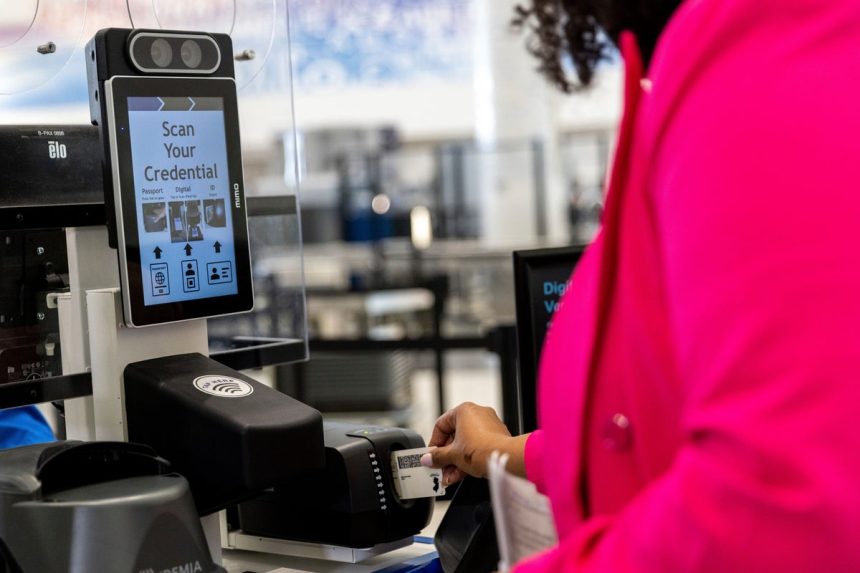
For decades, international travelers have relied on physical booklets to verify their identity. However, the future of transit at U.S. airports involves a much simpler interaction: walking toward a digital kiosk, pausing for a quick scan, and receiving instant clearance.
This transition is being spearheaded by U.S. Customs and Border Protection (CBP). According to Diane Sabatino, the executive assistant commissioner of the CBP’s Office of Field Operations, the agency is aggressively scaling its contactless arrival infrastructure. In a recent discussion with the Washington Examiner, Sabatino outlined a vision where Global Entry members will eventually bypass manual checks entirely, moving through terminals without stopping unless a specific security inquiry is required.
## The Scale of Biometric Integration
The infrastructure for this change is already well underway. Currently, biometric facial comparison is operational at 238 airports across the United States. The process works by capturing a live image of the passenger and cross-referencing it against secure, pre-existing government databases.
To put the scale of this digital transformation into perspective, consider that global biometric technology in the aviation market is projected to grow significantly, with many experts predicting that by 2030, the majority of international travel touchpoints will be fully automated. This shift is not merely about convenience; it is a strategic move to enhance security accuracy while managing the increasing volume of global travelers.
## Evolution of Enhanced Passenger Processing
The foundation for this transition was laid in May 2025, when the CBP officially launched its Enhanced Passenger Processing initiative. By replacing manual document inspection with high-speed biometric matching, the agency aims to reduce wait times and minimize human error at busy ports of entry.
As this technology continues to roll out, the “passport-free” experience is expected to become the standard for international arrivals, fundamentally altering how we navigate global borders.