


When you purchase through links in our articles, we may earn a small commission. This doesn’t affect our editorial independence.
The Mini-LED Price Crash: Why High-End Display Tech is Now Affordable
For years, the display industry operated under a clear hierarchy: OLED was the undisputed king of contrast, while Mini-LED sat firmly in the “luxury” tier, reserved for high-end creative workstations and premium gaming setups. However, a significant market shift has occurred, and the barrier to entry for superior brightness and razor-sharp text clarity has effectively collapsed.
The Unexpected Democratization of Display Tech
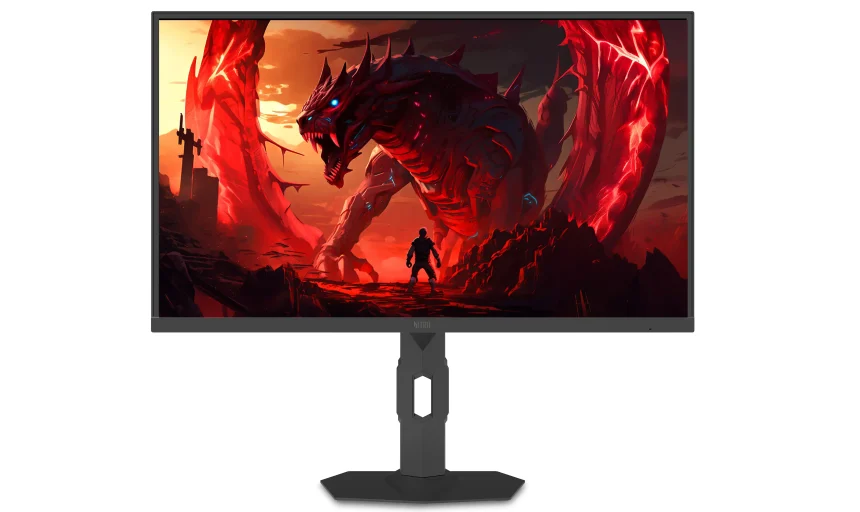
While many enthusiasts-myself included-were fixated on the slow decline of OLED pricing, a different technological evolution was unfolding in the background. Mini-LED technology, which utilizes thousands of tiny diodes to provide granular local dimming, has transitioned from a niche, expensive feature to a mainstream commodity.
The current market reality is startling. You no longer need to drop a month’s rent to secure a high-performance panel. Today, you can find plenty under $300, and in some instances, some under $200. To put this in perspective, this price point was previously occupied by entry-level, washed-out IPS panels that lacked any form of advanced backlighting.
Why the Sudden Shift?
The rapid price correction is largely driven by economies of scale and manufacturing efficiencies. As panel manufacturers have refined the production of Mini-LED backlights, the yield rates have improved, and the cost of the individual LED components has plummeted.
This trend was brought into sharp focus during the recent IFA trade show, where major manufacturers like Acer unveiled new, sleek Mini-LED offerings. These aren’t just budget-tier experiments; they are sophisticated displays that challenge the dominance of OLED by offering superior peak brightness-often exceeding 1,000 nits-without the inherent risk of burn-in that still haunts some OLED users.
Is Mini-LED the New Standard?
With the price gap narrowing, the decision between OLED and Mini-LED has become a matter of preference rather than budget. If you prioritize deep blacks and near-instant response times, OLED remains a strong contender. However, for users who need a monitor that excels in bright rooms, handles text-heavy productivity tasks without fringing, and offers incredible HDR performance at a fraction of the cost, the current generation of budget-friendly Mini-LED monitors is arguably the best value in the tech space right now.