



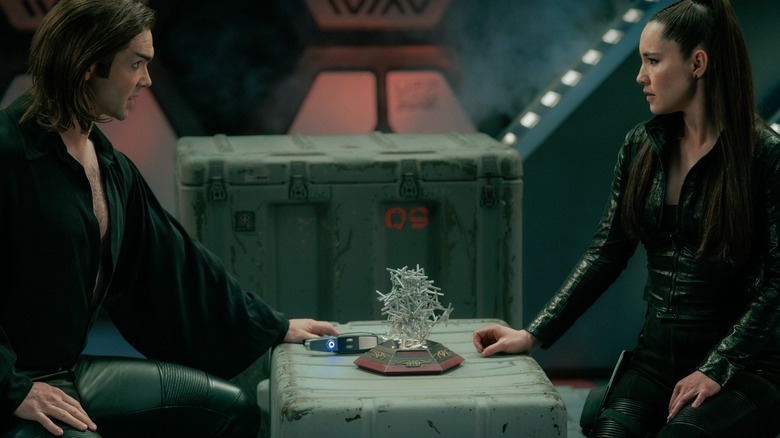
John Medland / Paramount+
Warning: This piece discusses major plot developments from the “Star Trek: Strange New Worlds” episode, “Like Chronitons Through the Hourglass.”
A Vulcan Game Returns to the Final Frontier
The latest installment of Star Trek: Strange New Worlds takes a surreal turn, introducing a mischievous, god-like entity portrayed by Rhys Darby. Wielding reality-bending abilities, this celestial being treats the USS Enterprise crew as subjects in a psychological study. Fascinated by the intensity of human drama, the entity forces the officers to navigate a narrative landscape reminiscent of high-stakes daytime soap operas, complete with heightened tensions and exaggerated emotional stakes.
The High-Stakes Drama of the Enterprise Crew
Within this chaotic, melodramatic framework, the show presents a dire medical crisis. Spock (Ethan Peck) suffers a catastrophic injury, leaving him in desperate need of a heart transplant to survive. The narrative tension peaks when the crew realizes the only compatible donor is Spock’s estranged and incarcerated half-brother, Sybok-also played by Peck. This setup mirrors the complex, often convoluted family dynamics frequently explored in long-running television dramas.
Connecting to Trek History: The Legacy of Kal-Toh
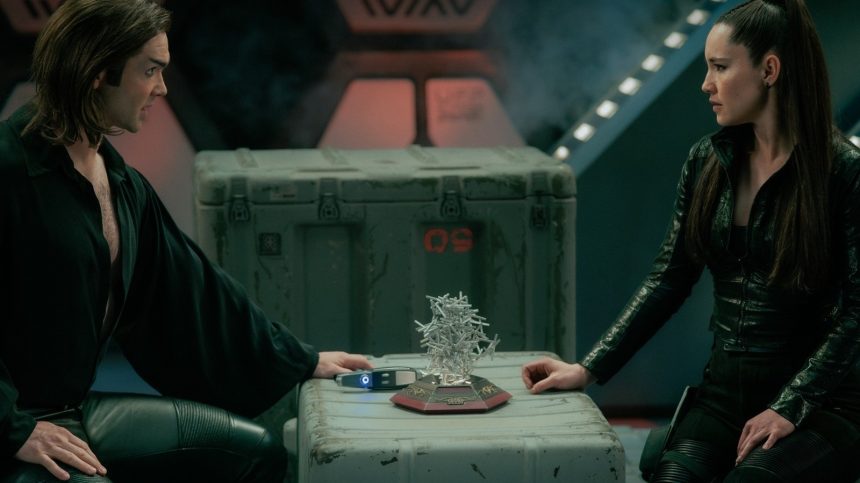
Beyond the soap-opera antics, the episode serves as a nostalgic nod to Star Trek: Voyager by reintroducing the intricate Vulcan logic game, kal-toh. Much like chess, but played with a complex, shifting geometric structure, kal-toh was a staple of Tuvok’s character development throughout the 1990s. By featuring Sybok engaging in this cerebral pastime, the series bridges the gap between the modern era and the franchise’s rich history. While chess has been a staple of human strategy for over 1,500 years, kal-toh represents the Vulcan philosophy of “infinite diversity in infinite combinations,” requiring players to balance order and chaos-a fitting metaphor for the emotional turmoil currently plaguing the Enterprise crew.