



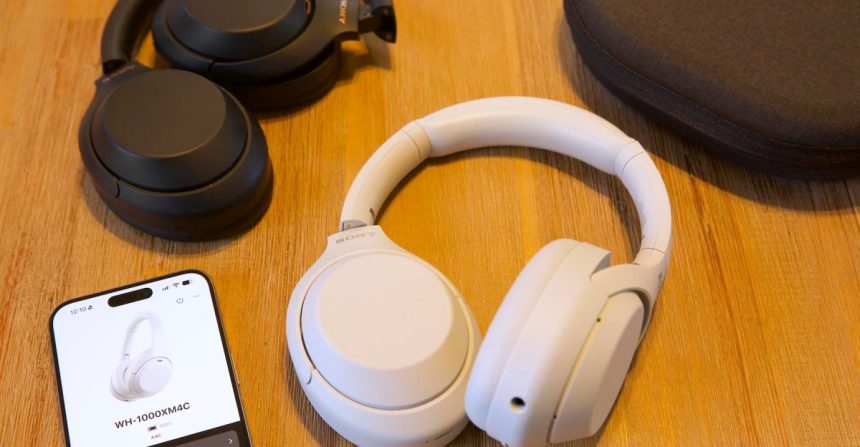
The Return of a Classic: Sony Reintroduces the WH-1000XM4C
For nearly a decade, the premium audio market has been defined by a fierce rivalry between Sony and Bose, with both manufacturers constantly pushing the boundaries of active noise cancellation (ANC) technology. A standout moment in this timeline occurred in late 2020 when Sony launched the WH-1000XM4. These headphones quickly became the industry gold standard, praised for their balanced audio signature, effective noise suppression, and highly portable form factor. Following a period of unavailability, Sony has officially revived this fan-favorite model, rebranding it as the WH-1000XM4C.
Design Philosophy and Portability
Visually, the XM4C remains virtually indistinguishable from its predecessor, though Sony has introduced a fresh lavender colorway to modernize the aesthetic. The primary appeal remains the classic folding hinge mechanism, which allows the headset to collapse into a compact footprint. This design choice is significant because it contrasts with the non-folding, streamlined chassis introduced with the XM5 in 2022. While the newer XM6 attempted to bridge the gap by offering a more portable build than the XM5, the XM4C remains the superior choice for travelers who prioritize space-saving gear.
Technical Evolution and Hardware Constraints
While the exterior design is a welcome blast from the past, the internal hardware highlights the rapid pace of audio innovation. The XM4C continues to rely on the legacy QN1 processor and a four-microphone array for its noise-canceling capabilities. To put this into perspective, the audio landscape has shifted dramatically since 2020:
- XM4C: QN1 chip with 4 microphones.
- XM5: QN1 chip with 8 microphones for enhanced ambient sound processing.
- XM6: Advanced QN3 chip with 12 microphones, providing significantly higher precision in isolating human voices and high-frequency noise.
By today’s standards, the XM4C’s hardware is undeniably aging. However, Sony has addressed this by recalibrating the internal sound profile. By tweaking the digital signal processing (DSP), the company has managed to align the XM4C’s audio output with the sonic characteristics of their latest flagship models, ensuring that even with older hardware, the listening experience remains competitive in the current market.