


Apple’s Foldable Strategy: Why the “iPhone Duo” Defies Expectations
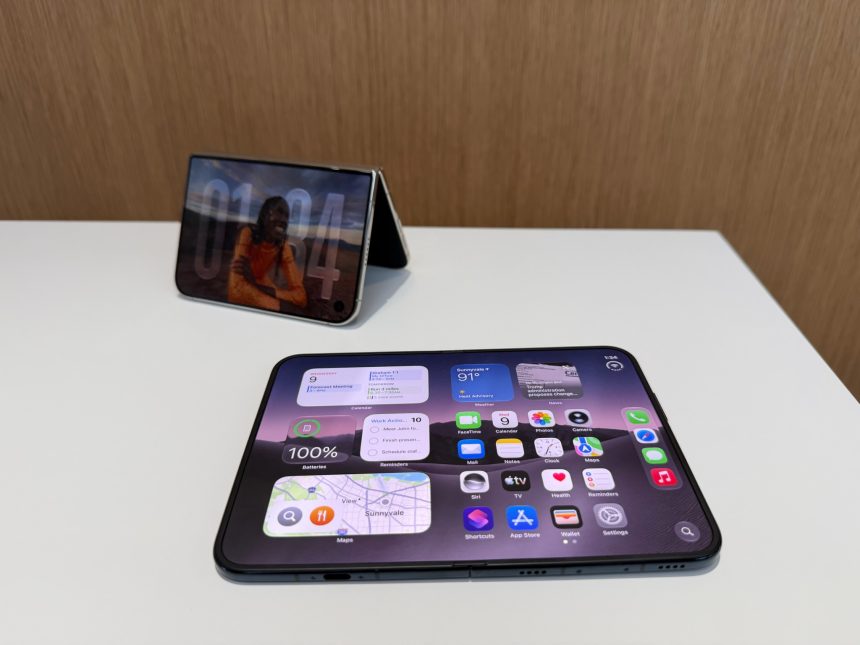
For an extended period, industry analysts and tech enthusiasts were convinced that Apple’s inaugural foray into the foldable market would carry the “Ultra” moniker. However, the Cupertino giant recently shattered those predictions by officially introducing the iPhone Duo.
A Strategic Shift in Branding
The decision to bypass the “Ultra” branding is a calculated move. While the device is undeniably a high-end piece of hardware, it doesn’t aim to be the absolute pinnacle of Apple’s technological capabilities. By opting for “Duo,” Apple is signaling a focus on form factor and utility rather than raw, top-tier specifications. Consequently, users will notice that the device omits certain flagship staples, such as the advanced telephoto lens array and the high-capacity power cells found in the iPhone 18 Pro Max.
Market Positioning and Competitive Landscape
When evaluating where the iPhone Duo sits in the current ecosystem, it is best viewed as a direct rival to the standard Galaxy Z Fold 8. Both devices prioritize a compact, pocketable footprint over the “everything-but-the-kitchen-sink” approach.
This creates a clear divide in the foldable market. While the iPhone Duo targets the premium mainstream, Samsung reserves its most aggressive hardware-including superior battery longevity and professional-grade optics-for the Galaxy Z Fold 8 Ultra. As foldable adoption continues to grow-with global shipments projected to reach over 30 million units annually by 2025-Apple’s choice to enter with a “Duo” rather than an “Ultra” suggests they are prioritizing accessibility and design refinement over sheer spec-sheet dominance.