



Defying Convention: How Batsheva Hay Turned NYC Into an Unscripted Runway
For her latest spring collection, designer Batsheva Hay chose to dismantle the traditional fashion week playbook entirely. Rather than opting for the polished, controlled environment of a studio presentation or a standard runway show, Hay orchestrated a spontaneous, guerrilla-style takeover of New York City’s public spaces.
On a sweltering Wednesday, the designer transformed her NoLIta boutique into a makeshift backstage area. Her cast-a mix of long-time muses, brand regulars, and fresh faces discovered on the street-prepared for a trek that would bypass the industry’s gatekeepers and head straight for the heart of Washington Square Park.
“We have experimented with eccentric presentations in the past, both in front of our storefront and for live audiences,” Hay noted. “However, the most radical approach felt like stripping away the pre-selected crowd and utilizing the city itself as our primary venue.”
### A Psychedelic Procession Through the City
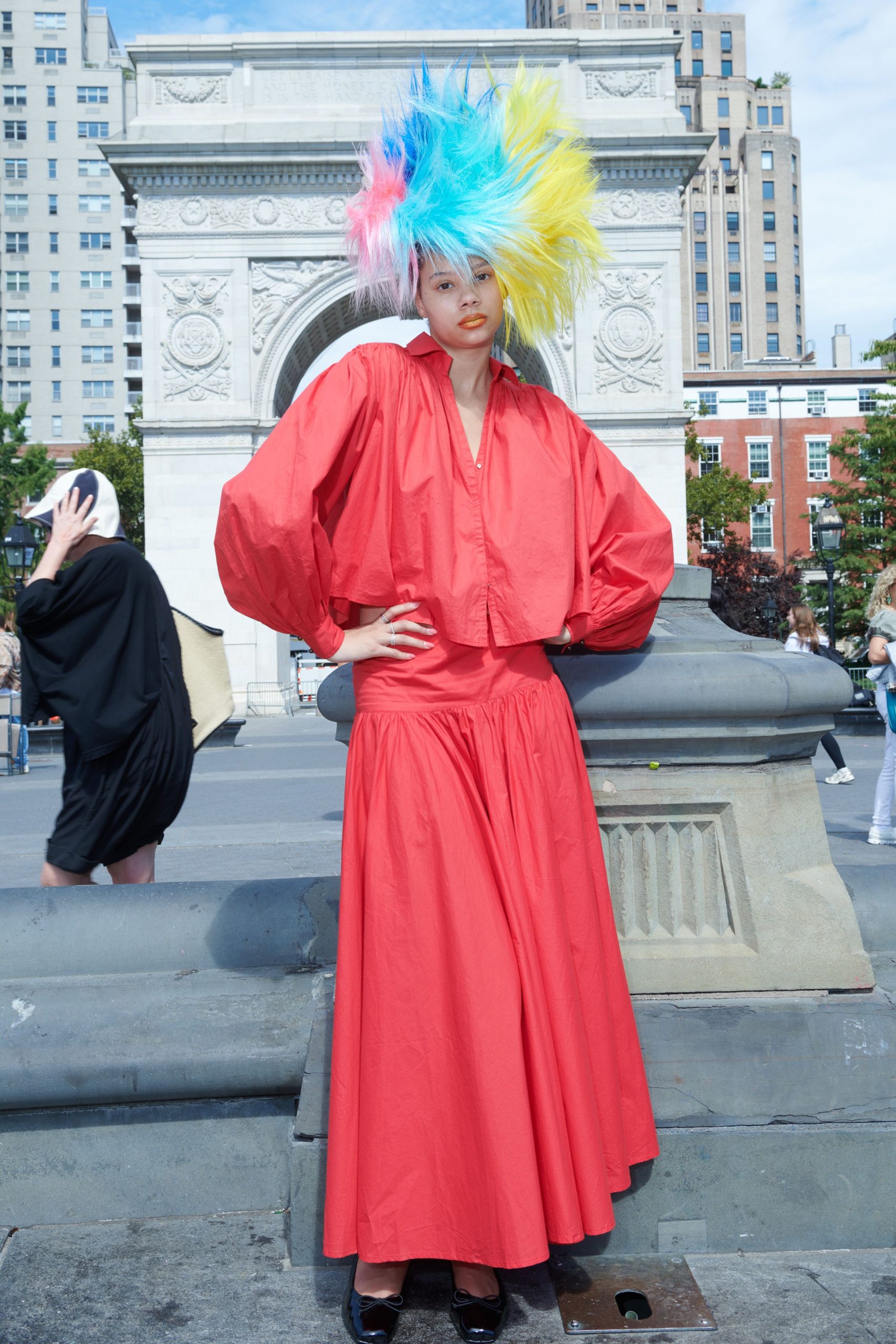
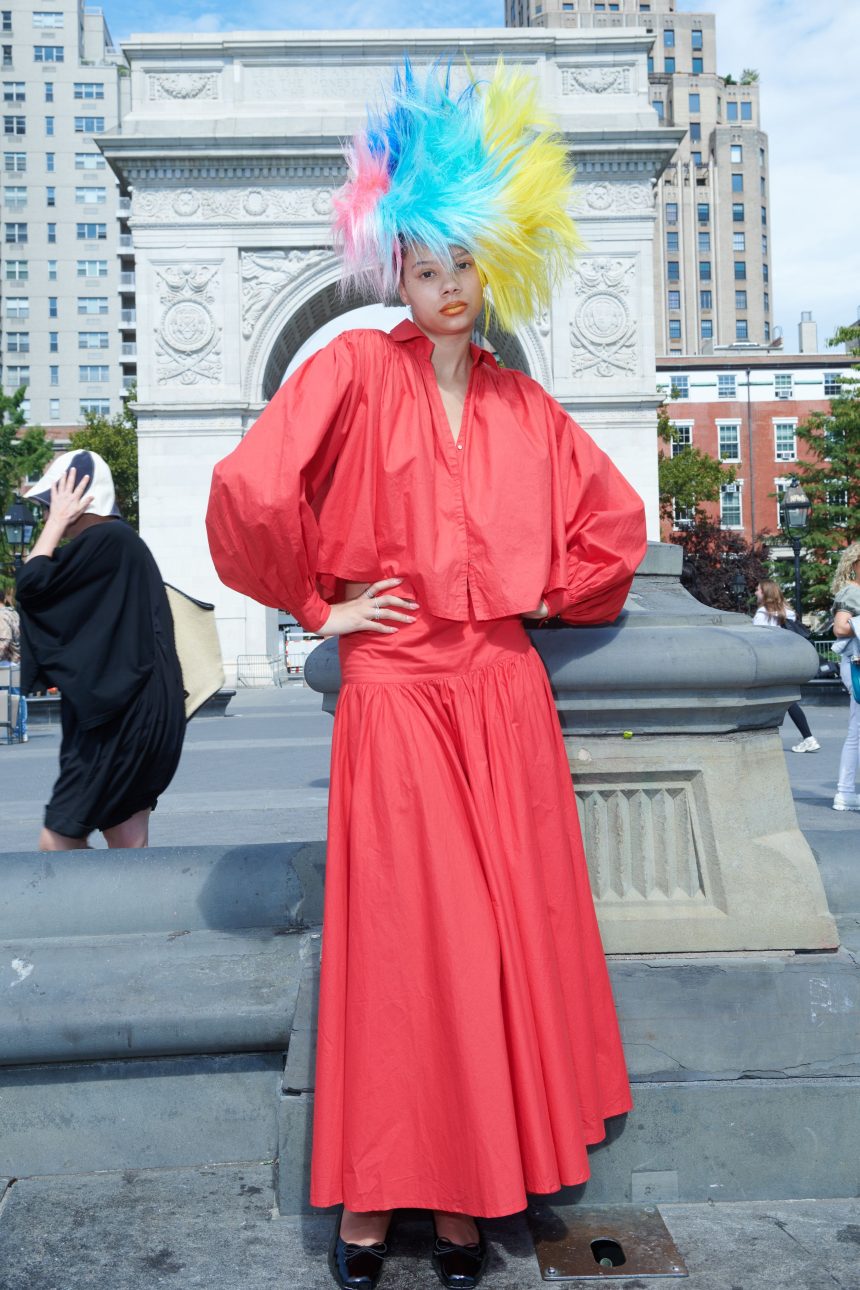
The spectacle was nothing short of surreal. As the ten models marched toward the park, their aesthetic-a vibrant collision of sheer organza plaids and nostalgic ditsy florals-was punctuated by neon wigs that evoked a bizarre, high-fashion hybrid of Parisian couture and 90s-era Troll Dolls.
The procession moved with the rhythmic curiosity of a psychedelic parade. As the group navigated the park and eventually gathered within the basin of the fountain, the reaction from the public served as a testament to the city’s unique temperament. While a handful of tourists paused to capture the moment on their smartphones, the majority of New Yorkers remained characteristically indifferent. This nonchalance is a hallmark of the city; in a metropolis where the extraordinary is an everyday occurrence, even a troupe of neon-haired models becomes just another layer of the urban tapestry.
### The Silhouette of the Season
Amidst the theatricality, the collection introduced a clear standout piece: a drop-waist circle skirt. The design serves as a modern homage to the 1980s silhouettes popularized by Norma Kamali, a style that has become a staple in Hay’s own personal wardrobe. By reinterpreting this vintage shape, Hay bridges the gap between historical fashion references and the contemporary, rule-breaking spirit of her brand.
This shift toward unscripted, public-facing fashion reflects a broader trend in the industry. According to recent data from the *Fashion Transparency Index*, there is a growing consumer demand for authenticity, with over 60% of Gen Z shoppers stating they prefer brands that engage with real-world environments rather than curated, inaccessible digital spaces. By taking her designs to the pavement, Hay isn’t just showing clothes; she is reclaiming the street as the ultimate arbiter of style.