





The Return of the People Mover: Renault’s Vision for the Electric Espace
When Renault collaborated with Matra in 1984 to launch the original Espace, they didn’t just release a new car; they fundamentally altered the DNA of European family travel. By marrying a galvanized steel chassis with lightweight composite bodywork and styling cues inspired by the aerodynamic profile of a TGV high-speed train, the Espace became the gold standard for interior volume. It was essentially a mobile lounge, prioritizing comfort and utility above all else. For enthusiasts of ingenious automotive engineering, the brand’s recent pivot toward generic, bulky three-row crossovers felt like a betrayal of that heritage.
A Departure from the SUV Status Quo
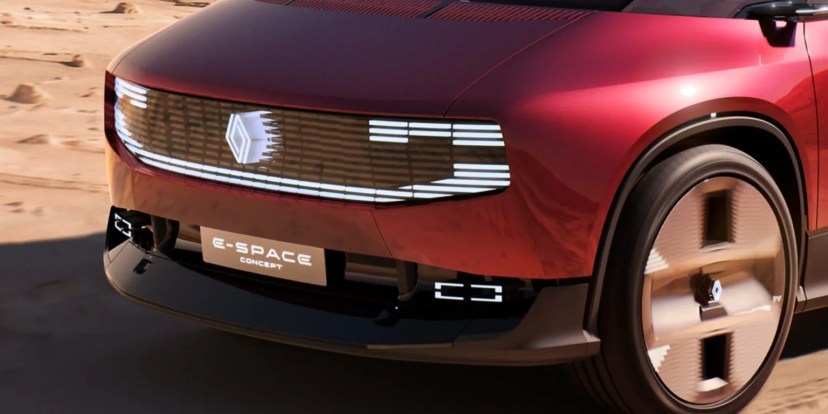
It appears Renault is now prepared to rectify its recent design trajectory. The unveiling of the E-Space Concept signals a deliberate move away from the “SUV-ification” that has dominated the market for the last decade. While current industry trends favor aggressive, high-riding silhouettes-often at the expense of efficiency-the E-Space Concept takes a different path. Dressed in a sophisticated “Ruby Black” finish, the vehicle abandons the bloated, oversized aesthetic typical of modern family haulers.
Prioritizing Aerodynamics and Efficiency
The E-Space Concept embraces a monolithic, one-box architecture that prioritizes functional aerodynamics over rugged posturing. This shift is timely; as the automotive industry transitions to electric powertrains, the “brick-like” shape of traditional SUVs has become a significant hurdle for range optimization. By returning to the MPV (Multi-Purpose Vehicle) form factor, Renault is leveraging a design that naturally cuts through the air more effectively than a standard crossover. This is a critical evolution, as recent data suggests that aerodynamic drag accounts for nearly 50% of energy consumption at highway speeds for electric vehicles. By reclaiming the space-efficient roots of the 1984 original, Renault is proving that family transport doesn’t need to sacrifice efficiency for interior capacity.