



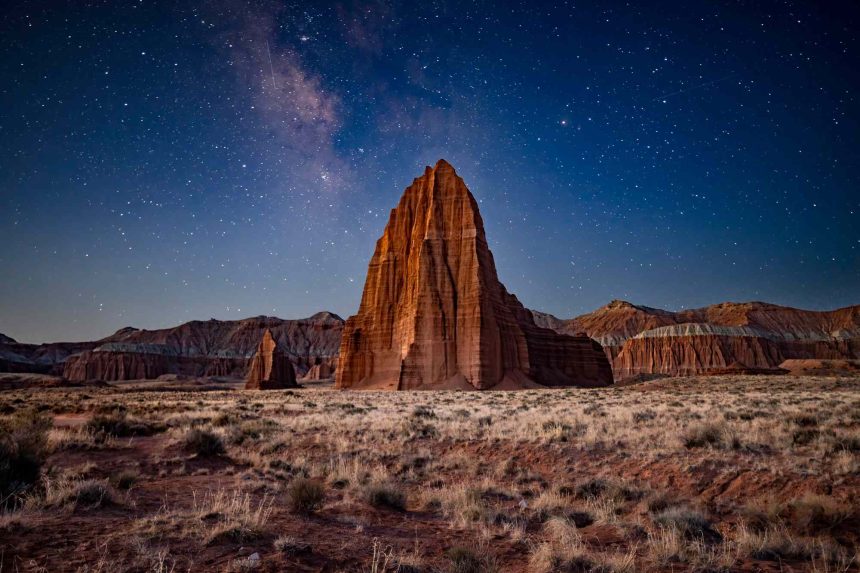
Beyond the Canyons: Why Capitol Reef is a Celestial Sanctuary
While Utah’s “Mighty 5” national parks are often celebrated for their dramatic red rock formations and winding slot canyons, Capitol Reef National Park offers a hidden dimension that truly comes alive after sunset. Beyond the geological wonders of the Waterpocket Fold, this park has quietly earned a reputation as one of the premier destinations in the United States for stargazing.
A Dark Sky Haven
Capitol Reef is officially designated as an International Dark Sky Park. This prestigious recognition is not merely a title; it is a testament to the park’s commitment to preserving its natural nocturnal environment. Because the park is situated far from the light pollution of major metropolitan areas, visitors are treated to a celestial display that is increasingly rare in the modern world.
According to recent data from the National Park Service, over 80% of the North American population can no longer see the Milky Way from their homes due to artificial light. In contrast, Capitol Reef offers a pristine view where the band of our galaxy appears with such intensity that it can cast shadows on the desert floor.
The Science of the Night
The park’s high elevation and arid climate play a crucial role in its clarity. Low humidity levels mean there is less water vapor in the atmosphere to scatter light, resulting in a “crispness” to the stars that is difficult to replicate elsewhere.
Think of it like a high-definition screen versus an old analog television; while other locations might offer a blurry, washed-out view of the cosmos, Capitol Reef provides a sharp, high-contrast experience where constellations, planets, and deep-sky objects are visible to the naked eye. During the summer months, the core of the Milky Way is so bright that it often appears as a luminous, textured cloud stretching across the zenith.
Tips for Your Nocturnal Expedition
To make the most of your visit, consider these strategies for an optimal stargazing experience:
* Timing is Everything: Plan your trip around the new moon phase. During a full moon, the natural light can be bright enough to wash out fainter stars and nebulae.
* Acclimatization: Give your eyes at least 20 to 30 minutes to adjust to the darkness. Avoid looking at your phone screen, as the blue light will reset your night vision.
* Strategic Locations: While the entire park is dark, areas like the Panorama Point and Goosenecks Overlook provide elevated vantage points that offer a 360-degree view of the horizon, perfect for tracking the movement of the stars throughout the night.
Whether you are an amateur astronomer with a telescope or simply someone looking to reconnect with the vastness of the universe, the silence of the desert combined with the brilliance of the night sky creates an experience that is both humbling and unforgettable.
Come to Utah’s Capitol Reef National Park for the canyons, stay for the stargazing. » More Info >>>