



The Evolution of Performance: Inside James Hype’s Ambitious “Project 1000”
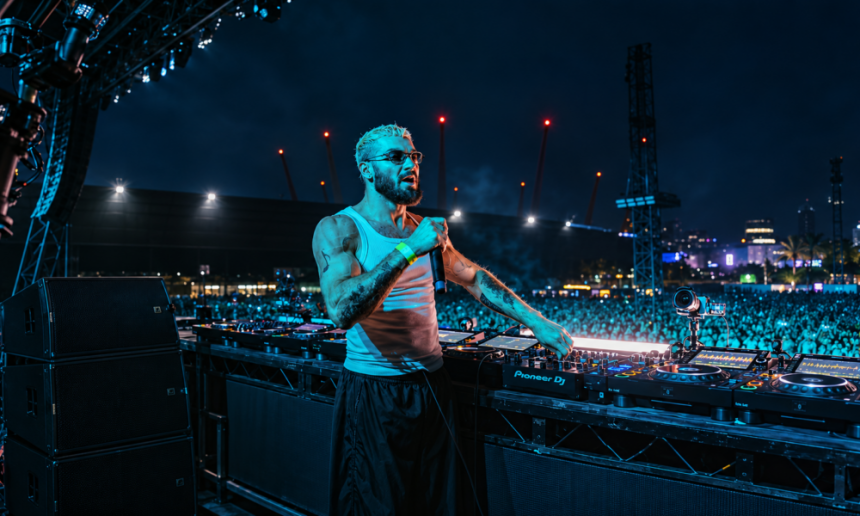
For years, James Hype has redefined the boundaries of live electronic music, transforming the DJ booth into a high-stakes laboratory of technical precision. By masterfully layering acapellas, rhythmic loops, and melodic stems across four decks, he has turned standard DJ sets into complex, real-time productions. Now, he is pushing this philosophy to its absolute limit with “Project 1000”-a daring endeavor to mix 1,000 tracks within a single two-hour window. Utilizing a massive rig consisting of 16 CDJs and four mixers, Hype is attempting a feat that challenges the physical and cognitive limits of modern DJing, a task he candidly admits might be bordering on the impossible.
Scaling the Setup: Why 16 Decks?
The genesis of this monumental challenge traces back to September, when Hype unveiled a custom-built, square-shaped performance station. Rather than a standard linear setup, this configuration houses four distinct clusters of CDJs. It is important to clarify that the goal is not to play 16 songs simultaneously-a feat that would result in sonic chaos-but rather to maximize creative fluidity. By having 16 players at his fingertips, Hype gains instantaneous access to a vast library of pre-loaded samples, vocal hooks, and instrumental layers. This eliminates the “loading time” bottleneck, allowing him to queue up multiple creative ideas simultaneously and transition between them with unprecedented speed.
Overcoming Technical Hurdles
Transitioning from a standard four-deck setup to a 16-deck behemoth introduced significant engineering obstacles. In a typical professional environment, Pioneer DJ’s PRO DJ LINK protocol is designed to network a maximum of four players. To bypass this limitation, Hype had to architect a complex signal chain that splits the 16 units across four separate mixers. Integrating these disparate systems into a cohesive, functional booth required a complete rethink of his workflow, turning the technical setup itself into a feat of engineering as impressive as the performance it facilitates.
To put the scale of this challenge into perspective, a standard high-energy DJ set typically features between 40 and 60 tracks per hour. By aiming for 500 tracks per hour, Hype is essentially performing at a pace ten times faster than the industry standard. This level of intensity requires not just technical prowess, but a level of physical endurance and mental focus rarely seen in the dance music industry today.