





The Sunset of Amazon Mechanical Turk: A Digital Era Comes to an End
The landscape of digital labor is shifting as Amazon prepares to wind down its long-standing crowdsourcing platform, Mechanical Turk (MTurk). According to an official notice, the service will officially stop accepting new clients on July 30, 2026. While Amazon Web Services (AWS) maintains that current users can operate without immediate disruption, the company has explicitly stated that no further feature development or innovation is planned for the platform.
For all intents and purposes, Mechanical Turk has entered a state of managed decline. While it remains operational for now, the platform is effectively on life support, signaling the conclusion of a nearly two-decade experiment in human-powered computation.
From Micro-Tasks to AI Training
Debuting in 2005, Mechanical Turk was designed to bridge the gap between human cognition and machine limitations. It functioned as a global marketplace where “Turkers” were compensated with modest sums to execute “Human Intelligence Tasks” (HITs)-simple, repetitive actions like transcribing receipts, identifying objects in images, or categorizing the emotional tone of text snippets.
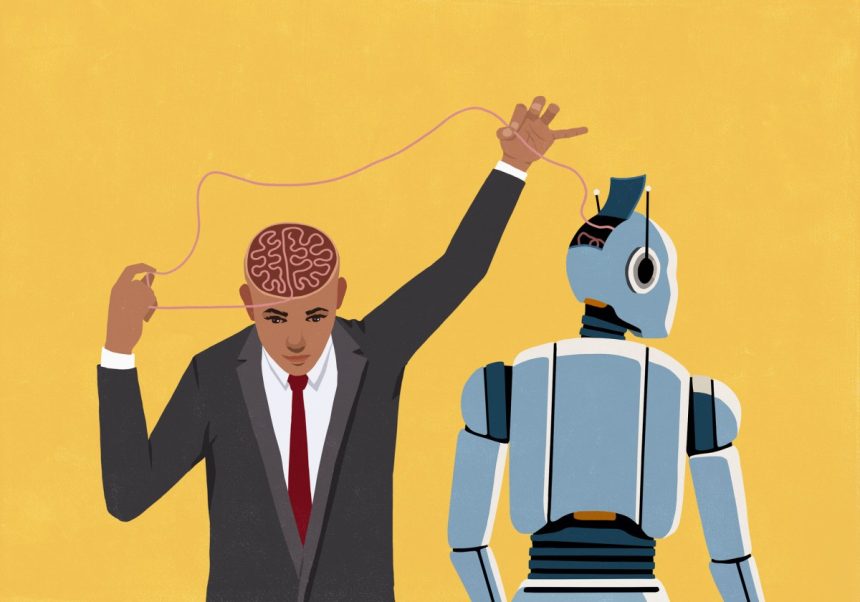
As the tech industry pivoted toward machine learning, MTurk found a new lease on life. By 2018, Amazon integrated the platform into its SageMaker ecosystem, positioning it as a vital resource for annotating the massive datasets required to train neural networks. It became the backbone for many “AI-first” startups, often serving as the invisible human engine behind products that claimed to be fully automated-a modern irony given that the original 18th-century “Mechanical Turk” was a famous hoax involving a human hidden inside a chess-playing cabinet.
The Ethical and Operational Paradox
Throughout its existence, the platform was frequently embroiled in controversy. It became a focal point for discussions regarding the ethics of “gig” labor and the exploitation of low-wage workers. Notably, the platform was even implicated in the periphery of the Facebook-Cambridge Analytica scandal, highlighting the potential for crowdsourced labor to be weaponized for data harvesting.
However, the most significant threat to the platform’s relevance came from the very technology it helped build. As generative AI tools became more accessible, the quality of data on MTurk began to plummet. A 2023 study revealed that nearly half of the platform’s workforce-between 33% and 46%-had begun using AI models to complete their assigned tasks. This created a feedback loop where AI was being trained on data generated by other AI, leading to concerns about “model collapse” and the degradation of data integrity.
A Future Without Human-in-the-Loop?
The decline of Mechanical Turk reflects a broader trend in the tech industry: the diminishing need for manual human intervention in data processing. As automated systems become more adept at self-correction and synthetic data generation, the traditional crowdsourcing model has struggled to remain competitive.
Many industry observers and long-time users argue that the platform’s relevance had already evaporated years ago. On community forums like Reddit, veteran researchers and workers have noted that the site became increasingly plagued by bot activity and fraudulent submissions, making it difficult to extract high-quality results. For many, the 2026 deadline is simply the formal acknowledgment of a reality that has been apparent for some time: the era of human-as-a-service is being rapidly superseded by the era of autonomous intelligence.
As Amazon shifts its focus away from this legacy infrastructure, the industry is left to grapple with the long-term implications of a workforce that has been largely automated out of existence, and the question of whether human oversight will remain a necessary component in the future of AI development.