





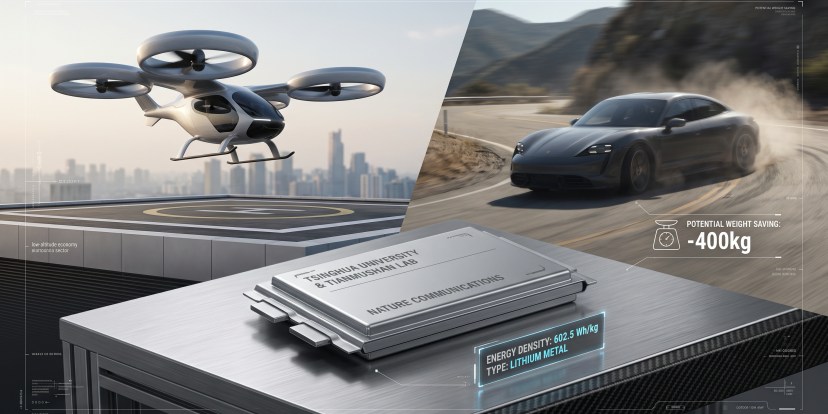
The Weight Problem: Why EVs Are Struggling to Shed Pounds
For decades, the automotive world lived by Colin Chapman’s legendary mantra: “Simplify, then add lightness.” It was the golden rule for performance, prioritizing agility and mechanical purity. However, the transition to electrification has effectively turned this philosophy on its head. When you pilot a contemporary high-performance EV through a technical series of corners, the laws of physics become painfully apparent. Despite the instant, neck-snapping torque at your disposal, the experience is marred by the sheer inertia of the vehicle. Beneath the sleek, aerodynamic bodywork and high-tech interiors lies a fundamental flaw: we are essentially hauling around a massive, heavy battery pack that acts as a persistent anchor.
The Lithium-Ion Bottleneck
The primary obstacle to achieving a lightweight electric vehicle is the current state of lithium-ion technology. Most manufacturers rely on graphite-anode cells, which are rapidly approaching their physical limits. Currently, these cells are hitting a theoretical ceiling of roughly 350 Wh/kg. Because energy density has plateaued, the only way for engineers to provide the long-distance range that modern consumers demand is to increase the physical size of the battery pack. This creates a vicious cycle: larger batteries require stronger chassis components and beefier suspension systems to handle the extra weight, which in turn necessitates even more power, leading to the “rolling battleship” phenomenon we see on roads today.
Beyond the Current Limits
To put this into perspective, consider the evolution of consumer electronics. While smartphones have become thinner and more efficient, electric vehicles are trending in the opposite direction, often tipping the scales at over 5,000 pounds. This mass doesn’t just impact handling; it increases tire wear, puts immense strain on braking systems, and requires more energy just to move the vehicle from a standstill. As we look toward the future, the industry is desperately searching for a breakthrough in solid-state batteries or silicon-anode technology to finally break the reliance on heavy, energy-dense packs. Until we can significantly increase the energy density per kilogram, the dream of a truly lightweight, long-range electric sports car remains largely out of reach.


![Buddy Director Reveals A Scrapped Scene That Was A ‘Bridge Too Far’ For Producers [Exclusive]](https://www.mixtv1.com/wp-content/uploads/2026/08/26119-attachment.jpg)