





Is Europe’s New Border Tech Threatening Its Tourism Dominance?
The European Union’s ambitious push to modernize border security through its new Entry-Exit System (EES) is facing significant backlash. Industry leaders are sounding the alarm, suggesting that the transition to biometric-heavy border checks could inadvertently cripple the continent’s appeal to international visitors.
The World Travel and Tourism Council (WTTC), a leading voice for the global private travel sector, recently issued a stark warning: if the rollout of this digital infrastructure isn’t managed with extreme care, Europe risks losing its competitive edge in the global tourism market.
The Friction of Biometric Borders
At the heart of the controversy is the EES, a system designed to replace manual passport stamping with automated biometric verification. For travelers from non-EU nations-including the UK-this means providing fingerprints and facial scans upon their first entry into the Schengen Area.
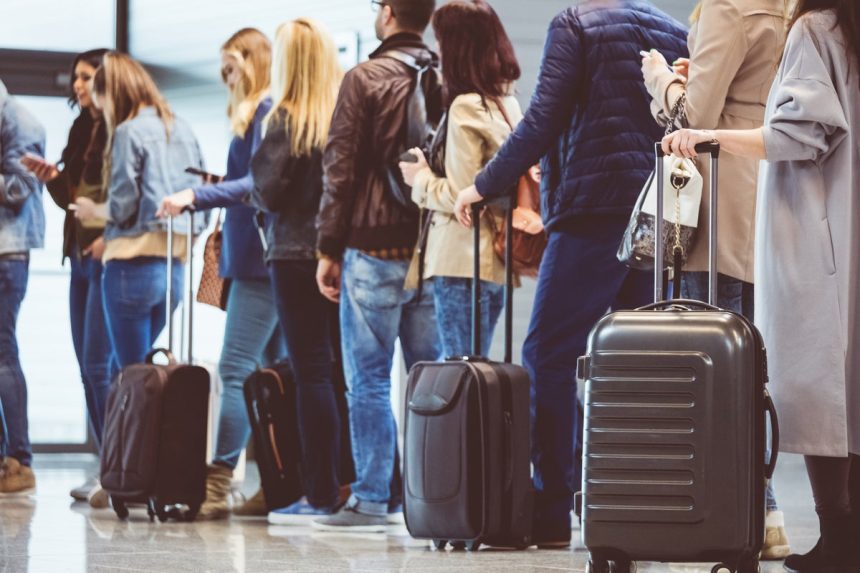
While the goal is to enhance security and streamline long-term data management, the reality on the ground has been far from seamless. Reports of multi-hour queues at major European hubs have already begun to surface, leading the WTTC to caution that these operational bottlenecks are a direct threat to the visitor experience.
The Economic Cost of Waiting
The impact of these delays is not merely anecdotal; it is a quantifiable economic risk. A recent WTTC study revealed that one-third of international travelers would actively avoid the Schengen Area if they anticipated border wait times exceeding three hours.
When projected against 2026 tourism forecasts, this sentiment could result in a staggering loss of 41 million arrivals. In financial terms, this translates to a potential deficit of £34 billion in visitor spending-a massive blow to the economies of countries that rely heavily on tourism revenue.
A Call for Strategic Reform
To mitigate these risks, the WTTC has proposed a three-pronged strategy to ensure the EES does not become a deterrent to travel:
- Digital Pre-Registration: The council is pushing for the rapid adoption of the “Travel to Europe” mobile application. By allowing passengers to submit their biometric data and personal details before they even reach the airport, the physical burden on border kiosks can be significantly reduced.
- Enhanced Public Awareness: There is a critical need for a coordinated communication campaign across key international markets. Travelers need to be fully informed about what the EES entails before they book their flights to avoid confusion at the gate.
- Operational Resilience: The WTTC is demanding a guarantee of “full operational readiness.” This includes ensuring that airports are equipped with enough staff to manage the transition, reliable kiosk hardware that doesn’t crash under pressure, and clear signage to separate first-time entrants from returning visitors.
The “First-Visit” Hurdle
The current confusion stems largely from the distinction between a traveler’s first visit and subsequent trips. On the initial entry, a visitor must create a digital profile at a self-service kiosk, which remains valid for three years. On future trips, the process is meant to be faster, requiring only a quick registration of presence.
However, the lack of clear delineation at many airports has led to a “bottleneck effect,” where all passengers are funneled into the same lines, regardless of their registration status.
A Balancing Act for Policymakers
Gloria Guevara, the former president and CEO of the WTTC, has emphasized that while the EES is a necessary evolution for border security, it must be implemented with a “traveller-first” mindset.


“If lengthy delays become the new normal, tourists will simply choose other destinations,” Guevara noted. “Europe cannot afford to compromise its global standing.”
This sentiment is echoed by the Airports Council International, which has formally petitioned EU leadership for greater flexibility. As the summer travel season approaches, the pressure is mounting on EU member states to pause or refine the rollout to prevent a logistical disaster.
Ultimately, the success of the EES will depend on whether European authorities can prove that security and convenience are not mutually exclusive. If they fail to bridge this gap, the continent may find that its most advanced border technology is the very thing driving its visitors away.