





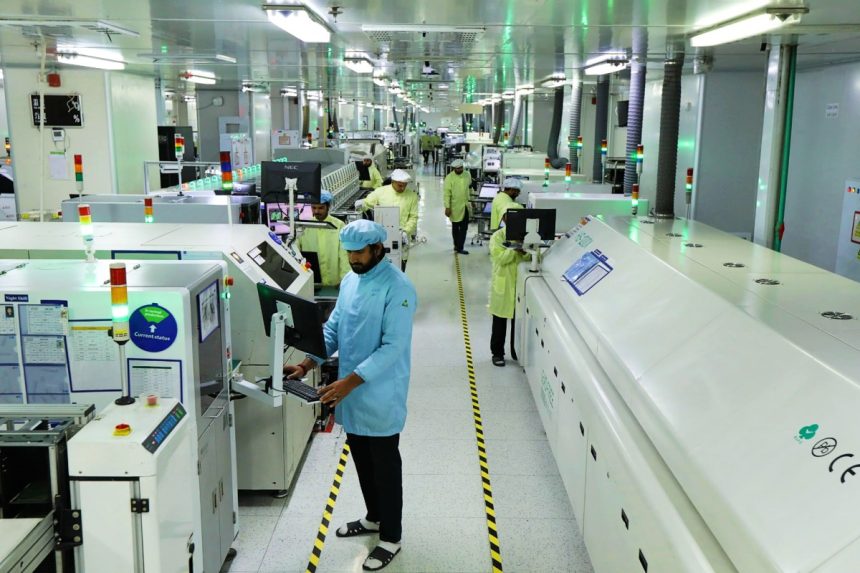
India’s Smartphone Manufacturing Evolution: The Dixon-Vivo Strategic Alliance
The Indian government has officially greenlit a landmark manufacturing joint venture between Chinese tech giant Vivo and the domestic electronics powerhouse Dixon Technologies. This development signals a pivotal shift in India’s industrial landscape, potentially ushering in a new era of growth that mirrors the success seen by Apple in transforming the nation into a premier global smartphone production hub.
Navigating Regulatory Hurdles and Strategic Partnerships
This partnership, initially unveiled in late 2024, faced a rigorous vetting process under India’s Press Note 3 regulations. Introduced in 2020, these rules mandate heightened government oversight for foreign direct investment (FDI) originating from nations that share a land border with India, specifically targeting Chinese capital. With this approval, the joint venture is set to acquire specific manufacturing assets from Vivo, enabling the production of Vivo handsets alongside electronic goods for other third-party brands.
The ownership structure is strategically balanced: Dixon Technologies holds a 51% majority stake, while Vivo retains the remaining 49%. This configuration is widely viewed by industry experts as a blueprint for future collaborations. By ceding majority control to an Indian entity, Chinese smartphone brands can navigate the complex regulatory environment while fostering deeper integration into the local ecosystem.
Bridging the Export Gap: Beyond the Apple Model
While Apple has successfully utilized India as a critical node in its global supply chain-currently accounting for roughly 57% of India’s total smartphone export volume-Chinese brands have historically focused on domestic consumption. Despite commanding a dominant 72% share of the Indian smartphone market, these Chinese firms contribute less than 10% to the country’s total exports. This disparity highlights a massive, untapped opportunity for India to become a global manufacturing powerhouse for these brands as well.
The shift toward local partnerships is not merely a business decision but a response to the evolving geopolitical climate. Following border tensions in 2020 and subsequent regulatory scrutiny-including tax investigations into major players like Xiaomi, Oppo, and Vivo-adopting a “local-first” manufacturing model has become the most viable path for long-term sustainability.
Synergy and Scale: The Impact on Dixon and Vivo
For Dixon Technologies, the deal is a significant catalyst for growth. During a recent earnings call, Managing Director Atul Lall projected that the venture could handle an annual volume of 20 to 22 million smartphones based on Vivo’s current market performance. This partnership bolsters Dixon’s reputation as the premier electronics manufacturing services (EMS) provider in India, building on its existing work with brands like Xiaomi.
Tarun Pathak, Research Director at Counterpoint Research, emphasizes that this arrangement is mutually beneficial. “This joint venture creates a win-win scenario,” Pathak noted. “It provides Vivo with the policy stability required to operate in a sensitive regulatory environment, while simultaneously allowing Dixon to scale its operations and increase local value addition.”
The Future of “Make in India”
Vivo continues to lead the Indian market, maintaining a 23% shipment share as of Q1 2024. By transitioning to a majority Indian-owned manufacturing structure, the company is not only securing its supply chain but also aligning itself with the Indian government’s broader “Make in India” initiative. As global supply chains continue to diversify away from China, this Dixon-Vivo alliance serves as a clear indicator that India is successfully positioning itself as the next essential destination for high-volume electronics manufacturing.
India’s Electronics Manufacturing Surge: Identifying the Key Players
The landscape of electronics manufacturing in India is undergoing a seismic shift. As global supply chains diversify away from traditional hubs, India has emerged as a primary destination for high-tech production. For investors and industry observers, identifying the companies driving this transformation is essential to understanding the country’s long-term economic trajectory.
The Strategic Pivot Toward Domestic Production
India’s ambition to become a global electronics powerhouse is no longer just a policy goal; it is a tangible reality. Government initiatives, such as the Production Linked Incentive (PLI) schemes, have successfully incentivized both domestic firms and multinational corporations to establish large-scale assembly lines within the country. Recent data from the Ministry of Electronics and Information Technology indicates that India’s electronics production reached approximately $101 billion in the 2023 fiscal year, a significant leap from previous years.



This growth is not merely about assembly; it is about building a robust ecosystem. By focusing on components, semiconductors, and finished goods, India is moving up the value chain. Companies that have successfully integrated into this framework are now positioned as the most reliable bets for sustained growth in the sector.
Key Drivers of the Electronics Build-Out
Several factors are fueling this rapid expansion:
- Supply Chain Diversification: Global brands are increasingly adopting a “China Plus One” strategy, making India a natural choice due to its massive domestic market and improving infrastructure.
- Policy Support: The PLI scheme has been a game-changer, effectively lowering the cost of manufacturing and encouraging capital expenditure in high-tech sectors.
- Rising Domestic Demand: With a burgeoning middle class and increasing digital penetration, the local demand for smartphones, wearables, and home appliances provides a stable foundation for manufacturers.
Evaluating Market Leaders
When analyzing the market, it is crucial to look beyond the hype. The most resilient companies are those that have secured long-term contracts with global tech giants while simultaneously investing in local R&D. For instance, the rise of contract manufacturers-often referred to as Electronic Manufacturing Services (EMS) providers-has been instrumental. These firms act as the backbone of the industry, allowing global brands to scale operations rapidly without the burden of managing individual factory floors.
Consider the analogy of a modern construction project: while the architect (the global brand) designs the vision, the general contractor (the EMS provider) ensures the foundation is solid, the materials are sourced, and the structure is built to code. In India, these “general contractors” are currently the most critical entities to watch.
Looking Ahead: The Road to Global Competitiveness
While the progress is undeniable, the journey toward becoming a global electronics hub is ongoing. Challenges such as logistics costs and the need for a more specialized workforce remain. However, the momentum is clearly in favor of India. As the country continues to refine its manufacturing capabilities, the focus will likely shift toward high-end semiconductor packaging and advanced component manufacturing, further cementing its role in the global tech supply chain.
Note: This article contains affiliate links. If you choose to make a purchase through these links, we may receive a commission at no additional cost to you. This arrangement supports our commitment to providing independent, high-quality journalism.
About the Author: Our editorial team specializes in tracking the intersection of technology, policy, and market trends within the Indian subcontinent. We provide in-depth analysis to help our readers navigate the complexities of the evolving tech landscape.