




The Human Element: Why AI Interviewer Avatars Influence Perceived Fairness
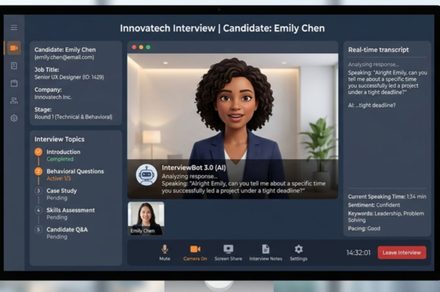
Modern AI hiring systems are often praised for their ability to apply uniform standards to every candidate. However, new research suggests that even when an algorithm is perfectly consistent, the human experience of that technology is deeply subjective. A recent study highlights that the race and gender of an AI avatar can fundamentally alter how rejected applicants perceive the fairness of the hiring process.
In a controlled experiment, 220 participants engaged in a mock interview for a customer service position, interacting with one of four distinct, photorealistic AI avatars. Despite every participant receiving an identical rejection notice, their assessment of the process varied significantly based on the avatar’s demographic traits. This finding is a critical reminder that an algorithm audit-which typically focuses on code and data-often overlooks the psychological impact of the interface itself. Candidates do not interact with raw data; they interact with a digital persona that mimics human questioning and evaluation.
The Paradox of Partial Demographic Matching
Perhaps the most counterintuitive discovery was that “partial matching” led to the most negative perceptions of fairness. Candidates who shared only one demographic trait with the avatar-either gender or skin color-rated the interview experience as less equitable than those who shared both traits or neither.
While the researchers did not pinpoint a definitive psychological cause, this phenomenon suggests that partial resemblance may trigger higher expectations of empathy or understanding. When those expectations are met with a standard rejection, the outcome may feel more like a personal slight. This indicates that simply assigning a “familiar” face to an AI interviewer is not a silver bullet for building trust; in some cases, it may inadvertently heighten feelings of bias.
Shifting Perspectives Post-Rejection
Interestingly, trust levels remained stable across all groups during the interview phase. However, eye-tracking data showed that participants spent significantly more time observing the faces of avatars whose skin color differed from their own. This suggests an inherent human tendency to scrutinize “out-group” representatives more closely.
The shift in perception occurred immediately following the rejection. Once the negative outcome was delivered, candidates became markedly more skeptical. Those who experienced a racial mismatch with the
The Evolving Landscape of AI: From Conversational Search to App Branding
The rapid integration of artificial intelligence into our daily digital tools is reshaping how we interact with content, verify media authenticity, and deploy software. Recent updates from industry giants like Google and Meta highlight a shift toward more intuitive, user-centric AI experiences.
YouTube Transforms Discovery with Conversational AI
Gone are the days of relying solely on rigid keyword strings to find the perfect video. YouTube is expanding its “Ask YouTube” feature to a wider audience across the United States. Initially introduced as an exclusive experiment for Premium subscribers during Google I/O 2026, this conversational search tool is now becoming a standard utility.
Rather than forcing users to guess the right search terms, “Ask YouTube” allows for natural language queries. If you are looking for a specific tutorial or a niche topic but aren’t sure how to phrase it, you can simply describe the situation or the concept you have in mind. The AI interprets the intent behind your request, surfacing relevant videos that might have been buried under traditional SEO-heavy results. This move signals a broader industry trend: moving away from “searching” and toward “consulting” with AI interfaces.
The Transparency Gap: Meta’s Watermarking Struggles
While AI generation tools are becoming more powerful, the infrastructure to track them remains inconsistent. Meta recently launched “Muse Image” and “Muse Video,” generative models capable of creating high-fidelity media from text prompts. To combat misinformation, Meta implemented “Content Seal,” an invisible watermarking system designed to tag AI-generated assets.


However, the system has hit a significant snag: the detection tool is failing to identify images created by its own Muse Image AI. This technical oversight is particularly concerning given the controversy surrounding Meta’s data usage policies, which automatically opted in Instagram users to have their public content used for AI training. As of late 2026, industry reports suggest that nearly 60% of AI-generated media lacks reliable provenance metadata, making Meta’s failure to verify its own output a stark reminder of the challenges in AI governance and digital trust.
Professionalizing AI Development with Google AI Studio
For developers and hobbyists, Google AI Studio has become a go-to platform for rapid prototyping. By allowing users to describe an application and refine it through iterative prompting, Google has effectively lowered the barrier to entry for web development. Previously, the primary drawback was the deployment phase; finished projects were relegated to cumbersome, cryptic Cloud Run URLs that lacked professional appeal.
Google is now addressing this friction by allowing developers to assign personalized subdomains to their projects. Users can now host their applications under the ai.studio domain-for example, my-project.ai.studio. This update is a major win for creators who need to share polished demos with clients, include projects in professional portfolios, or distribute internal tools. By providing a clean, memorable URL, Google is helping bridge the gap between a “quick AI experiment” and a “professional-grade web application.”
These developments underscore a pivotal moment in tech: as AI becomes more capable of creating and organizing content, the focus is shifting toward usability, accountability, and professional presentation.