



A Strategic Shift: Ford and Geely Forge Manufacturing Alliance in Spain
The automotive landscape is undergoing a seismic transformation, marked by a growing trend of Western manufacturers integrating Chinese expertise into their domestic production lines. The latest development in this narrative sees Ford Motor Company entering a significant manufacturing partnership with Geely, signaling a pivot in how legacy automakers approach the competitive European market.
The Mechanics of the Joint Venture
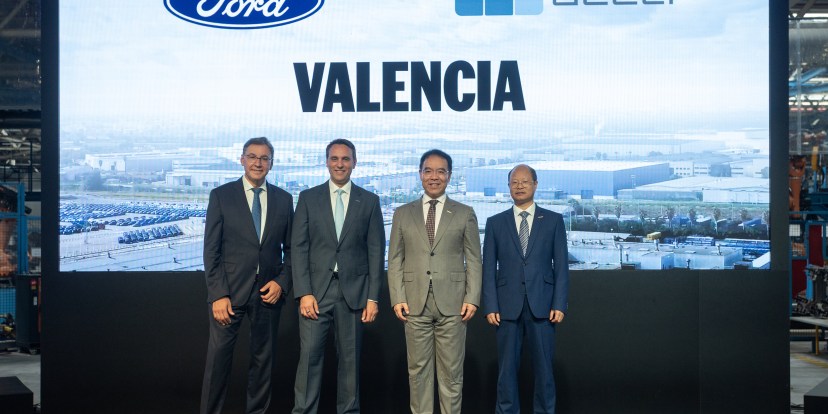
Ford has officially announced a strategic joint venture with the Chinese automotive giant, Geely. Under the terms of this agreement, Ford will retain a 66% majority stake, while Geely will hold the remaining 34%. This collaboration is slated to begin operations in the first half of 2027, contingent upon the successful completion of standard regulatory reviews.
This partnership is centered at Ford’s existing manufacturing facility in Valencia, Spain. Rather than operating in isolation, the plant will serve as a dual-purpose hub, continuing the production of the popular Kuga while simultaneously integrating new assembly lines for Geely-branded vehicles.
Production Roadmap: Electrification and Expansion
The Valencia plant is poised to become a cornerstone of Ford’s European electrification strategy. Starting in 2028, the facility will initiate the production of two distinct electric SUVs under the Geely banner.
Beyond the Geely-branded models, the factory will also serve as the birthplace for a new, versatile “multi-energy” crossover. This vehicle is the result of a collaborative engineering effort between the two companies, designed to cater to the evolving demands of European drivers who require flexibility between hybrid and fully electric powertrains. Furthermore, the plant will introduce a specialized iteration of the Bronco family, specifically engineered to navigate the unique infrastructure and regulatory requirements of European roads.
Why This Matters for the European Market
This move reflects a broader industry reality: the rapid acceleration of Chinese EV technology is forcing a rethink of traditional manufacturing silos. By leveraging Geely’s advanced electric vehicle platforms, Ford is effectively shortening its time-to-market for next-generation zero-emission vehicles.
Industry analysts note that this strategy mirrors the “co-opetition” model seen in other sectors, where companies share manufacturing overhead to mitigate the high costs of EV development. With the European Union’s stringent emissions targets-which aim for a 100% reduction in CO2 emissions from new cars by 2035-partnerships like this are becoming essential for legacy brands to maintain their market share against a wave of new, tech-forward competitors.