





Beyond the Headlines: The Reality of Tesla’s Autonomous Safety Data
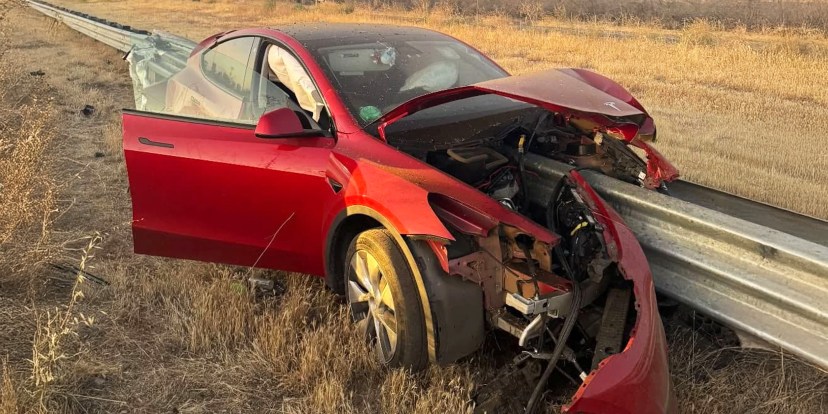
While social media feeds have been dominated by viral images of a Tesla Robotaxi prototype meeting an unfortunate end against a tree stump, focusing on a single isolated incident misses the broader, more concerning picture. The real narrative isn’t about a solitary test vehicle struggling in a suburban neighborhood; it is found in the sobering statistics regarding the performance of consumer-owned Teslas currently navigating our public roads.
A Record-Breaking Surge in Reported Incidents
Recent disclosures provided to the National Highway Traffic Safety Administration (NHTSA) have unveiled a troubling trend. Data covering May 2026 reveals that Tesla’s semi-autonomous driver-assist systems were involved in 207 documented crashes within that 30-day window. To put this into context, this figure represents the highest monthly volume of crash reports linked to the company’s software since the inception of federal tracking.
This spike is not merely a statistical anomaly; it serves as a critical indicator of the growing friction between advanced driver-assistance systems (ADAS) and the unpredictable nature of real-world traffic environments. As more vehicles equipped with these features hit the pavement, the frequency of reported “disengagements” or collisions has climbed, raising urgent questions about the maturity of the technology currently in the hands of everyday drivers.
Contextualizing the Data
To understand the gravity of these 207 incidents, one must look at the trajectory of safety reporting over the last few years. While Tesla often highlights the theoretical safety benefits of its software, the raw numbers submitted to federal regulators suggest a different reality. When compared to previous reporting periods, the May 2026 data indicates a sharp upward curve that defies the company’s internal projections for system reliability.
For a deeper dive into the specific metrics and the implications of these redacted records, you can review the full analysis here: