



Chicago’s Independent Spirit: Summer’s Last Dance Returns for 2026
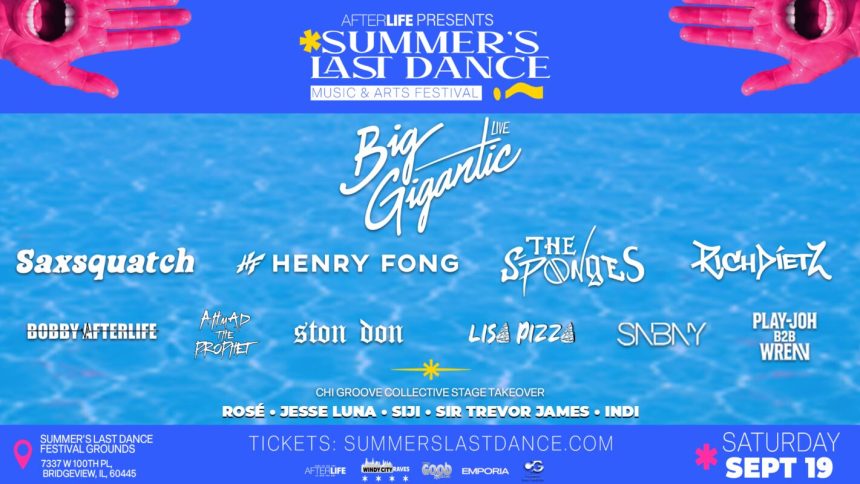
While Chicago remains the undisputed birthplace of house music, the local festival landscape has shifted significantly toward large-scale, corporate-backed events. Amidst this consolidation, a rare beacon of community-driven culture persists. Summer’s Last Dance, a fully independent and philanthropic festival, has officially confirmed its return for a third consecutive year. Scheduled for September 19 in Bridgeview, Illinois, the event serves as a vital grassroots alternative to the city’s massive commercial gatherings.
A Curated Lineup for the End of Summer
The festival has built a reputation for its eclectic programming, and the 2026 edition is no exception. Headlining the festivities is the Grammy-nominated electronic duo Big Gigantic, who will deliver their high-energy fusion of live saxophone, percussion, and heavy bass production. The bill also features the internet-famous Saxsquatch, bass house authority Henry Fong-known for his high-profile work with artists like Rihanna and J Balvin-and the groove-heavy house duo The Sponges. With over 20 artists scheduled across three distinct stages, the 12-hour marathon promises a seamless blend of house, funk, hip-hop, and live instrumentation.
Building on a Legacy of Diversity
Since its inception, Summer’s Last Dance has prioritized a diverse sonic palette, moving beyond the standard festival tropes. This commitment to variety is reflected in the event’s history, which has previously hosted a wide range of talent, from Chicago house legend Marshall Jefferson to mainstream heavyweights like KSHMR, Cheat Codes, and Waka Flocka Flame. By balancing legacy acts with rising stars, the festival has successfully carved out a unique niche in the Midwest circuit.
The Vision Behind the Music
The driving force behind this independent endeavor is veteran Chicago promoter Bobby De Maria. His vision for the festival goes beyond mere entertainment; by maintaining a philanthropic focus, the event ensures that the proceeds and the atmosphere contribute positively to the local scene. As the industry continues to see festival ticket prices rise-with some major events seeing a 15-20% increase in costs over the last three years-independent festivals like this provide a more accessible and intimate experience for fans who value community over corporate scale.