




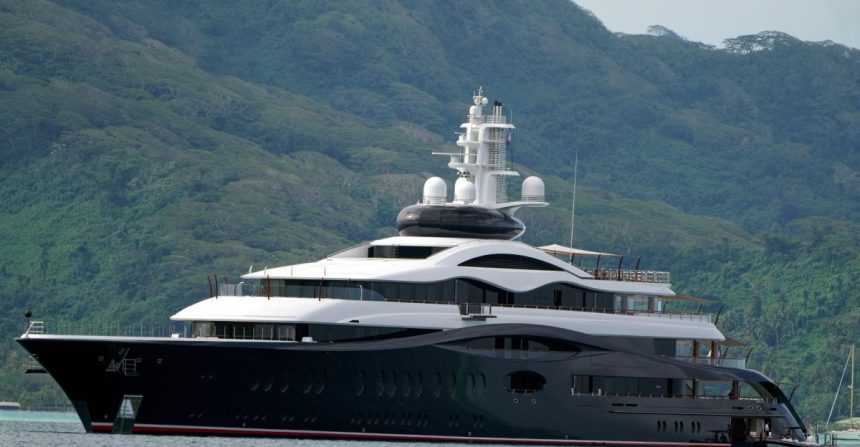
### Maritime Rescue Controversy: Did Zuckerberg’s Superyacht Ignore a Distress Call?
In the vast, often unforgiving waters of Southeast Alaska, the maritime tradition of rendering aid is considered a sacred duty. However, a recent incident near Farragut Bay has sparked intense public debate regarding the responsibilities of private luxury vessels when encountering those in peril.
#### The Rescue at Farragut Bay
Earlier this week, the *Wilderness Legacy*, a cruise ship navigating Alaskan waters, diverted its course to assist a small skiff that had become stranded after depleting its fuel supply. While the cruise ship successfully performed the rescue, towing the vessel to safety, reports from the *[Alaska Beacon](https://alaskabeacon.com/briefs/cruise-ship-helps-stranded-skiff-and-crew-in-southeast-alaska-as-zuckerberg-yacht-stands-by/)* and *[Halifax Shipping News](https://halifaxshippingnews.ca/2026/08/did-mark-zuckerbergs-yacht-not-stop-to-help.html)* suggest that the *Wilderness Legacy* was not the only-or even the closest-vessel in the vicinity.
#### Proximity and Allegations of Inaction
AIS tracking data indicates that *Launchpad*, the massive superyacht owned by Meta CEO Mark Zuckerberg, was positioned significantly closer to the stranded skiff than the cruise ship.
The situation took a contentious turn when Michael Love, a passenger aboard the *Wilderness Legacy*, shared his account on [Bluesky](https://bsky.app/profile/elkmovie.bsky.social/post/3mscqsxfulk26). According to Love, the cruise ship’s captain informed passengers that the *Launchpad* had been alerted to the situation but had “repeatedly refused to respond.” This revelation reportedly drew audible jeers and boos from the cruise ship’s passengers as they watched the superyacht remain stationary near the bay’s entrance while their own vessel maneuvered to assist the stranded boaters.
#### The Unwritten Rules of the Sea
Under the International Convention for the Safety of Life at Sea (SOLAS), masters of vessels are generally obligated to provide assistance to those in distress at sea, provided they can do so without serious danger to their own ship or crew. While the legal nuances of “distress” versus “inconvenience” are often debated, the maritime community places a high premium on the “Good Samaritan” ethos.
For context, modern superyachts are equipped with sophisticated communication arrays and rescue capabilities that far exceed those of smaller commercial vessels. When a vessel of *Launchpad’s* stature-often valued in the hundreds of millions-is perceived as ignoring a nearby distress signal, it highlights a growing tension between the privacy of ultra-high-net-worth individuals and the communal expectations of maritime safety.
#### Official Stance and Ongoing Inquiries
As of now, the US Coast Guard and the Marine Exchange of Alaska have remained tight-lipped regarding the specifics of the incident. Coast Guard Public Affairs Specialist Shannon Shepard confirmed to the *Alaska Beacon* that the distress event was logged at approximately 9:56 p.m., but further details regarding the *Launchpad’s* communication logs or potential involvement remain under scrutiny.
As the investigation continues, the incident serves as a stark reminder that even in the age of high-tech luxury travel, the fundamental rules of the sea remain a matter of public interest and ethical accountability.