



The Evolution of Range: How the Denza N8 Shattered the 1,000km Barrier
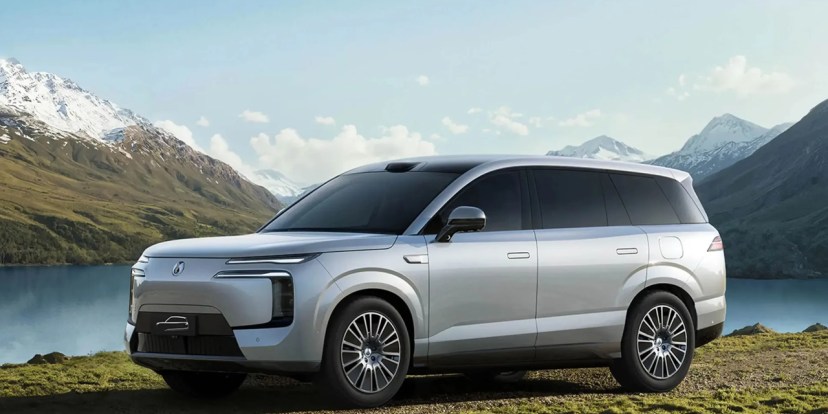
Rewind to just three years ago, and the landscape of long-distance travel looked vastly different. Achieving a driving range in the four-digit territory was an exclusive club reserved for vehicles tethered to internal combustion engines. When BYD first introduced the Denza N8 in 2023, the pure electric version featured a robust 108.8 kWh battery, yet it still fell short of the psychological 1,000km milestone. For those plagued by range anxiety, the only viable solution was opting for the plug-in hybrid (PHEV) variant, which boasted a combined range of 1,030 km.
A New Era for Battery-Electric Vehicles
In the hyper-competitive Chinese automotive sector, three years is equivalent to a decade in traditional manufacturing. The pace of innovation is relentless, and recent data from China’s Ministry of Industry and Information Technology (MIIT) confirms that the industry has moved beyond incremental improvements-it has fundamentally redefined what is possible for electric mobility.
The latest iteration of the battery-electric Denza N8 has officially surpassed the 1,000km threshold on a single charge. By integrating a massive 130 kWh battery pack, BYD has effectively eliminated the endurance gap between pure EVs and their hybrid counterparts. This leap in energy density means that drivers no longer need to compromise on powertrain choice to achieve true cross-country capability.
Why This Milestone Matters
To put this advancement into perspective, consider the shift in consumer expectations. Previously, a 500km range was considered the “gold standard” for a premium EV. Today, by doubling that capacity, BYD is addressing the primary barrier to mass adoption: the frequency of charging stops. Much like how the transition from wired landlines to mobile phones changed communication, the move toward 1,000km+ battery packs is transforming the electric vehicle from a city-commuter tool into a legitimate long-haul travel companion.
This development signals a broader trend where battery chemistry and vehicle efficiency are advancing faster than charging infrastructure can keep up. As manufacturers continue to push these boundaries, the reliance on fossil-fuel-assisted hybrids is likely to diminish, paving the way for a fully electrified future.