




# Securing Hubble’s Future: NASA’s Pivot to Commercial Partnerships
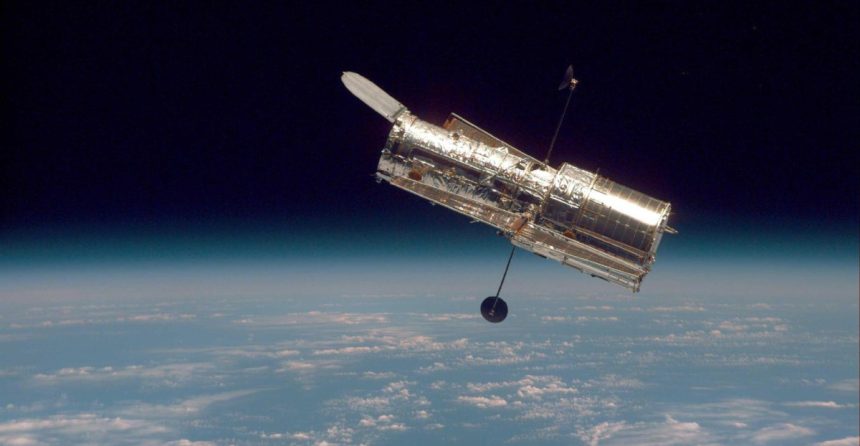
The iconic Hubble Space Telescope, a cornerstone of modern astronomy for over three decades, faces an inevitable gravitational decline. As atmospheric drag gradually pulls the observatory toward Earth, its operational lifespan is projected to conclude by the mid-2030s unless a corrective intervention is executed.
### The Gravitational Countdown
While the telescope remains fully functional and is not at immediate risk of atmospheric reentry, the laws of physics are relentless. Without a significant orbital boost to counteract the decay of its altitude, Hubble will eventually succumb to the pull of our planet. To prevent this premature end, NASA is actively seeking creative solutions to extend the mission of this legendary scientific asset.
### A New Era of Commercial Collaboration
Rather than relying solely on internal resources, the space agency is turning to the private sector. NASA is currently evaluating proposals from commercial entities capable of providing the necessary technology to stabilize or elevate Hubble’s orbit. This shift reflects a broader trend in the aerospace industry, where private innovation is increasingly leveraged to maintain and enhance government-owned space infrastructure.
As noted in an official NASA update, the agency is prioritizing the preservation of Hubble’s unique capabilities. Administrator Jared Isaacman emphasized that the telescope continues to provide invaluable data, stating that the agency is committed to exploring every viable, cost-effective strategy to keep the observatory operational for as long as possible.
### Why Hubble Still Matters
Despite the launch of more advanced observatories like the James Webb Space Telescope (JWST), Hubble remains a vital tool. Its ability to capture high-resolution images in the ultraviolet and visible light spectrums provides a complementary perspective to the infrared-focused JWST.
Recent data suggests that extending Hubble’s life could yield significant scientific dividends. For instance, maintaining the telescope through the 2030s would allow for long-term monitoring of transient cosmic events-such as supernovae and variable stars-that require decades of consistent observation to fully understand. By integrating commercial servicing, NASA hopes to ensure that this “eye on the universe” continues to push the boundaries of human knowledge well into the next decade.