



Venice Proposes Dynamic Pricing to Curb Overtourism
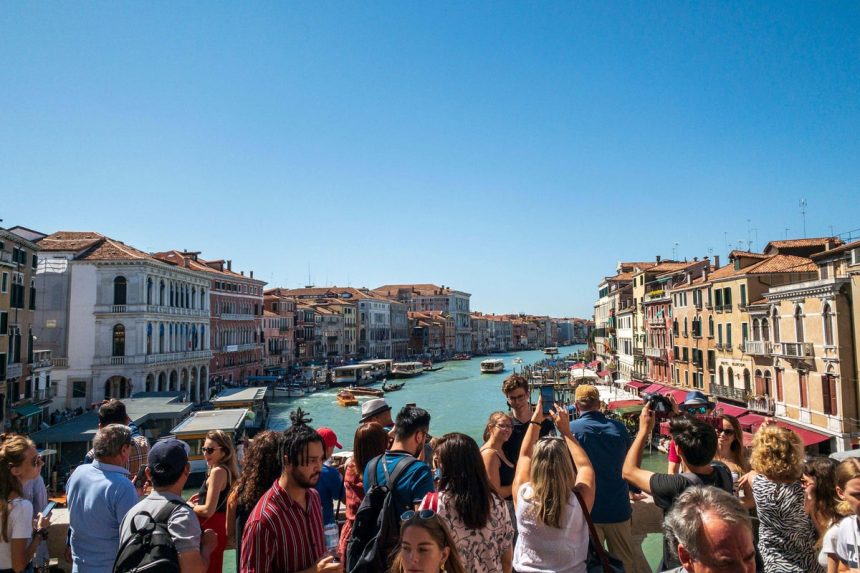
Venice is moving toward a more aggressive strategy to manage its persistent overcrowding crisis. The city’s administration is currently seeking government authorization to implement a dynamic, demand-based pricing model for its day-tripper access fee. Under this proposed system, the cost of entry could fluctuate based on visitor volume, with peak-day charges potentially reaching as high as 50 euros.
Moving Beyond Fixed Fees
Simone Venturini, the newly elected mayor of Venice, argues that the existing 10-euro flat fee has proven insufficient in deterring mass tourism during the city’s busiest periods. Rather than relying on a static price, the city aims to adopt a “surge-pricing” mechanism-a strategy commonly used by airlines and ride-sharing apps-to regulate foot traffic.
The mayor emphasizes that this financial adjustment serves a dual purpose: discouraging excessive crowds while generating essential revenue to offset the city’s massive maintenance bills. “We spend 100 million euros annually just on the physical upkeep of Venice,” Venturini noted. “This burden falls entirely on the shoulders of local residents and tourism taxes, as neither the Italian state nor international bodies provide the necessary funding.”
The Logistics of Maintenance
The logistical challenges of maintaining a historic, canal-based city are immense. Unlike land-locked cities where heavy machinery can easily access public spaces, Venice requires manual labor. Waste management, for instance, involves a labor-intensive process of using handcarts, specialized boats, and manual sweeping to clear the debris left by thousands of daily visitors. Venturini points out that day-trippers contribute significantly to this waste, yet their current contribution to the city’s upkeep remains disproportionately low.
Addressing the 50-Euro Ceiling
While the prospect of a 50-euro entry fee has sparked backlash from critics who fear it will exclude families and lower-income travelers, the administration clarifies that this figure represents a maximum threshold rather than a standard rate.
“We are currently collaborating with researchers to identify the optimal pricing tiers,” Venturini explained. “The 50-euro cap provides us with the flexibility to experiment. For instance, if bookings for a specific date exceed 40,000, we might implement a tiered increase-perhaps 20, 25, or 30 euros. It is not a blanket fee for every visitor.”
The Debate Over Resident Retention
The proposal has faced stiff opposition from housing advocates and political rivals who argue that the city is prioritizing tourist management over the needs of its citizens. Critics contend that the access fee effectively turns Venice into a “theme park” rather than a living city.
The demographic data supports these concerns. According to the Ocio housing advocacy group, the number of permanent residents in Venice’s historic center has dipped below 48,000, while the capacity for tourist accommodation has surged to over 51,500 beds. While Venturini maintains that these figures fail to account for unregistered students and seasonal workers, he acknowledges that the city must do more to incentivize long-term residency.
Evaluating the Financial Impact
The city’s experiment with entry fees has seen a steady increase in revenue. During the 2024 pilot phase, Venice generated 2.4 million euros from approximately 485,000 day-trippers over 29 peak days. By expanding the program to 54 days and doubling the fee for last-minute arrivals, revenue climbed to 5.4 million euros the following year.
Despite these gains, the mayor insists that the initiative is not a profit-seeking venture. “Our objective is not to transform Venice into a gated attraction