





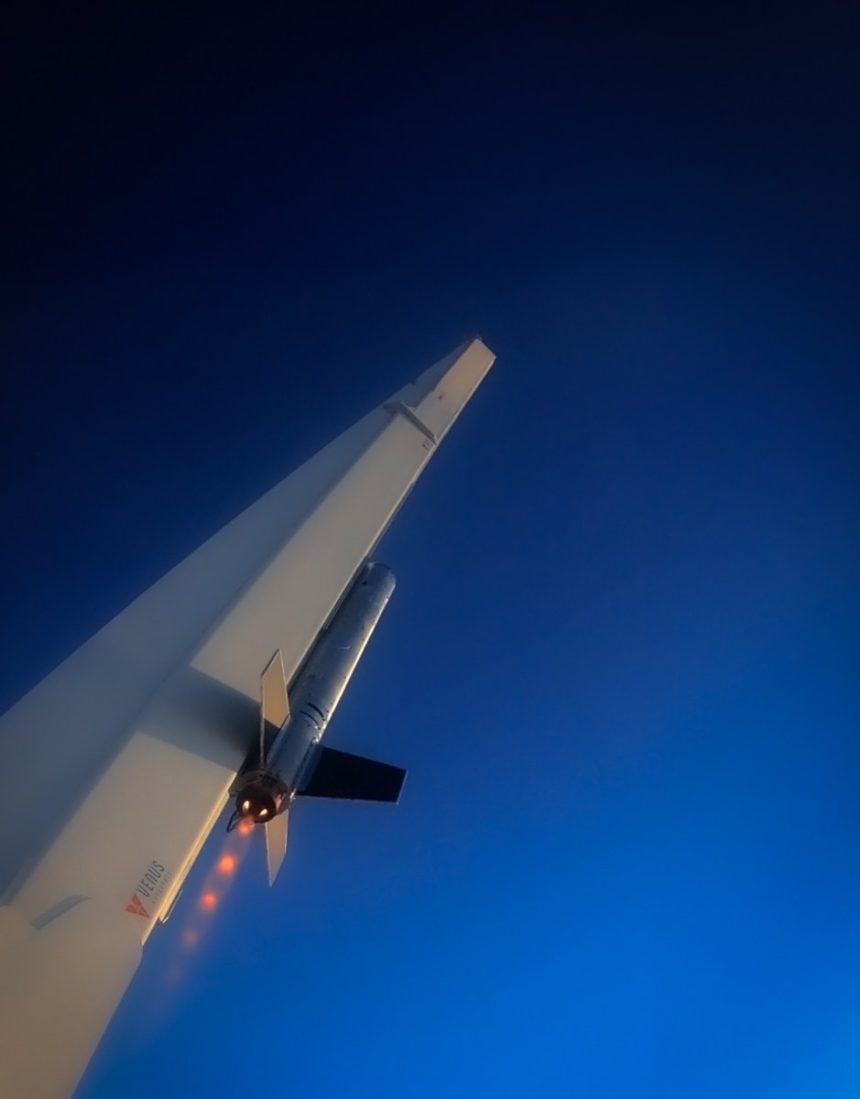
The Evolution of Propulsion: How Venus Aerospace is Pivoting to Defense
Innovation often follows a non-linear path. For Venus Aerospace, a startup initially focused on revolutionizing commercial hypersonic passenger travel, a breakthrough in propulsion technology has shifted their trajectory toward the defense and aerospace sectors. Their flagship innovation, the Rotating Detonation Rocket Engine (RDRE), has moved from a theoretical curiosity to a highly sought-after asset for modern military applications.
From Passenger Jets to Defense Systems
Founded in 2020 by the husband-and-wife team of CEO Sassie Duggleby and CTO Andrew Duggleby, Venus Aerospace originally set out to build clean, hypersonic aircraft for civilian transport. However, the landscape changed dramatically following a successful flight demonstration last year. The industry’s reaction was immediate: rather than asking about passenger jets, potential partners were eager to acquire the engine technology itself.
This pivot has led the company to focus on high-speed space vehicles and advanced weaponry. By integrating their RDRE into missile systems, they aim to replace traditional solid rocket motors with a more efficient, throttleable, and reusable alternative. As Andrew Duggleby noted, the company is now prioritizing the translation of their technical milestones into reliable, operational systems that meet the rigorous demands of defense and space missions.
Securing the Future: A $90 Million Milestone
To accelerate this transition, Venus Aerospace recently closed a $90 million Series B funding round. This capital injection is earmarked for scaling development and conducting specialized testing for defense-focused vehicle designs. The round was spearheaded by Mercury Fund, with significant backing from industry heavyweights including Lockheed Martin Ventures, Draper Associates, and Green Sands Equity, among others.
The Science Behind the RDRE
The concept of the Rotating Detonation Rocket Engine dates back to the mid-20th century. Unlike conventional engines that burn propellant in a standard combustion chamber, the RDRE utilizes a continuous supersonic combustion wave that travels through a circular channel. This design theoretically offers superior fuel efficiency and thrust-to-weight ratios.
While the physics were historically difficult to master, the modern era of additive manufacturing (3D printing) and advanced computational fluid dynamics has made the RDRE viable. Following early research at the University of Central Florida and successful ground tests by NASA and JAXA, Venus Aerospace achieved a major milestone in 2025 by successfully launching an RDRE-powered rocket into flight.
Overcoming the Heat Barrier
The primary engineering hurdle for the RDRE has always been thermal management. “Our core challenge over the last four years was preventing the engine from melting under the intense heat generated by the detonation process,” explained Sassie Duggleby. Having successfully solved these material science issues, the company is now focused on endurance.
With the support of a recent grant from the Texas Space Commission, Venus is constructing a larger, more robust test stand. This infrastructure is critical; while the engine has performed flawlessly for 32-second bursts across 600 tests, operational requirements for long-range missiles and space vehicles will necessitate sustained burns ranging from 6 to 15 minutes. As the industry pushes toward hypersonic dominance, Venus Aerospace is positioning itself as a key player in the next generation of propulsion.







![[Event Review] Washington, D.C. Delivers on a Major Music Weekend](https://www.mixtv1.com/wp-content/uploads/2026/10/39901-attachment.jpg)