



Reimagining Antiquity: Christopher Nolan’s Vision for The Odyssey
Christopher Nolan is no stranger to challenging cinematic conventions, and his latest project, The Odyssey, is proving to be his most provocative yet. By stripping away the traditional, stiff veneer often associated with historical epics, Nolan aims to present a version of Homer’s ancient world that feels visceral, immediate, and-most importantly-relatable to contemporary viewers.
Breaking the “Museum Piece” Stigma
For decades, audiences have been conditioned to view the ancient world through a lens of “cultural prejudice.” We often associate Greek epics with the Romantic era’s artistic interpretations-think marble-white statues, flowing bedsheet-style togas, and overly formal, Shakespearean-adjacent dialogue.
Nolan argues that this elevation of the past is largely illogical. In his recent discussion with Channel 4’s Krishnan Guru-Murthy, the director emphasized that his primary goal was to dismantle these arbitrary assumptions. He believes that by treating the ancient world as a “museum piece,” filmmakers inadvertently distance the audience from the raw, human stakes of the story. Instead, Nolan sought to ground the film in archaeological reality while filling the gaps with a narrative style that feels vital and urgent.
The “My Dad is Coming Home” Controversy
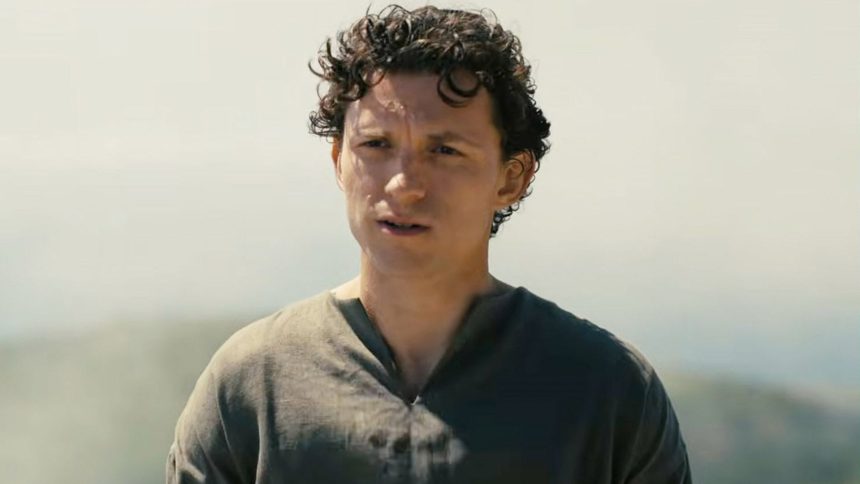
The film’s approach to dialogue has sparked a firestorm of debate online. Specifically, a line delivered by Tom Holland’s Telemachus-“my dad is coming home”-has become a focal point for critics who argue that such casual, modern phrasing clashes with the setting of an ancient Greek epic.
However, this critique ignores the inherent nature of the source material. The Odyssey is not a dry historical documentary; it is a mythic action epic. It features sirens whose songs drive men to madness and cyclopean monsters that defy natural law. In a world where the supernatural is commonplace, the linguistic register of the characters is arguably the least “inaccurate” element.
When pressed on the dialogue choice, Holland offered a pragmatic defense: “Because I wouldn’t have even said ‘Father’ back in the day, would I? I would have been Greek, so it’s no less correct.”
Prioritizing Emotional Resonance Over Intellectual Distance
Nolan’s strategy is rooted in a desire for emotional authenticity. As he noted in a recent interview with the Los Angeles Times, his objective was to utilize language that carries “emotional, not intellectual, meaning.”
By opting for contemporary speech patterns, Nolan hopes to bypass the “intellectual” barrier that often makes period pieces feel cold or inaccessible. He wants the audience to feel the desperation of Telemachus and the weight of Odysseus’s journey without the distraction of archaic, performative language.
The Archaeological Foundation
To build a world that feels “fresh,” Nolan didn’t just rely on his imagination; he turned to the Mycenaean period. By looking at the earliest archaeological evidence rather than the stylized paintings of the 18th and 19th centuries, the production team aimed to create a setting that is both consistent and credible.
This shift in perspective is significant. While some purists may cling to the “elevated” version of the ancient world,


Reimagining Antiquity: Christopher Nolan’s Vision for The Odyssey
Christopher Nolan has never been one to shy away from bold creative risks. As he prepares for the July 17, 2026, release of his latest epic, *The Odyssey*, the director is addressing the inevitable friction between historical purists and his own cinematic vision. For Nolan, the goal was never a dry, textbook recreation; it was about crafting an “earthy narrative” that resonates with modern sensibilities.
## A Modern Lens on Ancient Myths
Nolan’s casting strategy serves as the cornerstone of this approach. By populating the world of Homer with contemporary stars-such as Zendaya as Athena, Lupita Nyong’o as Helen of Troy, and Jon Bernthal as King Menelaus-Nolan aims to bridge the gap between ancient legend and today’s audience.
As noted in the *LA Times*, utilizing recognizable faces helps ground these larger-than-life mythological figures, making them feel accessible rather than distant relics. Nolan admits that while he knew this stylistic choice might invite scrutiny, he felt it was essential to assemble a top-tier cast to bring the weight of these icons to life.
## Addressing the “Batman” Armor Controversy
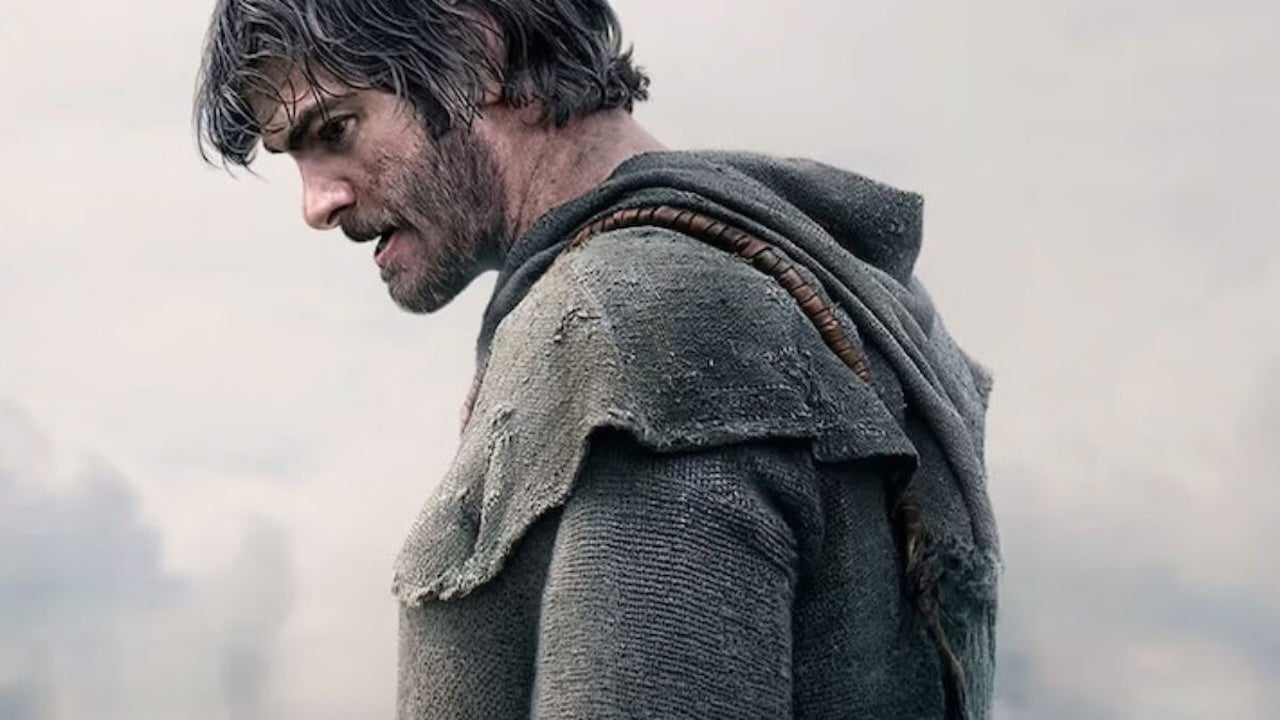
The film’s aesthetic, particularly the dark, imposing armor worn by Agamemnon, has sparked significant online debate. Critics were quick to draw comparisons to the Caped Crusader, with some social media users mocking the design as anachronistic, likening the aesthetic to Viking ships and modern superhero gear rather than Bronze Age reality.
However, in a recent feature for *Time*, Nolan pushed back against these claims of historical inaccuracy. He emphasized that the late 13th to early 12th century BC-the era of the Bronze Age collapse-is shrouded in mystery. Because our archaeological understanding of this period is based on fragmented evidence, Nolan argues that there is significant room for creative interpretation.
## The Science of Speculation
Nolan’s defense of the film’s costume design is rooted in material history. Collaborating with costume designer Ellen Mirojnick, the team explored the possibility of blackened bronze, a technique involving sulfur and precious metals that would have signaled immense wealth and status in the ancient world.
Furthermore, Nolan points out that the original Homeric texts were written centuries after the events they describe. The poets of that time depicted the Bronze Age through the lens of their own contemporary reality. By mirroring this process, Nolan believes he is honoring the spirit of the original storytelling tradition.
## From Interstellar to Ithaca
This isn’t the first time Nolan has navigated the tension between scientific or historical rigor and artistic license. He draws a direct parallel between *The Odyssey* and his 2014 sci-fi hit, *Interstellar*. While *Interstellar* relied on theoretical physics to visualize black holes, *The Odyssey* relies on “best-guess” archaeology to visualize the past.
In both instances, Nolan views his work as a form of educated speculation. Just as he faced pushback from the scientific community regarding the physics in *Interstellar*, he remains philosophical about the critiques leveled at his latest project.
“You just don’t want people to think that you took it on frivolously,” Nolan remarked. Ultimately, he hopes that even those who disagree with his stylistic choices will find themselves immersed in the world he has built. Whether or not the audience accepts his vision, the conversation surrounding *The Odyssey* proves that Nolan’s ability to spark debate remains as sharp as ever.