




Nopia: The Innovative Harmony Machine Poised to Disrupt Music Production
After capturing the collective imagination of the music technology community in 2023 with a viral teaser, the Nopia is finally nearing its commercial debut. Developed by Martin Grieco and Rocío Gal, this unique instrument has transitioned from a social media sensation to a tangible product. Recent demonstrations at MusicRadar have confirmed that the device is slated for release within the next few months, with an expected price point of approximately £550.
A New Paradigm for Harmonic Composition
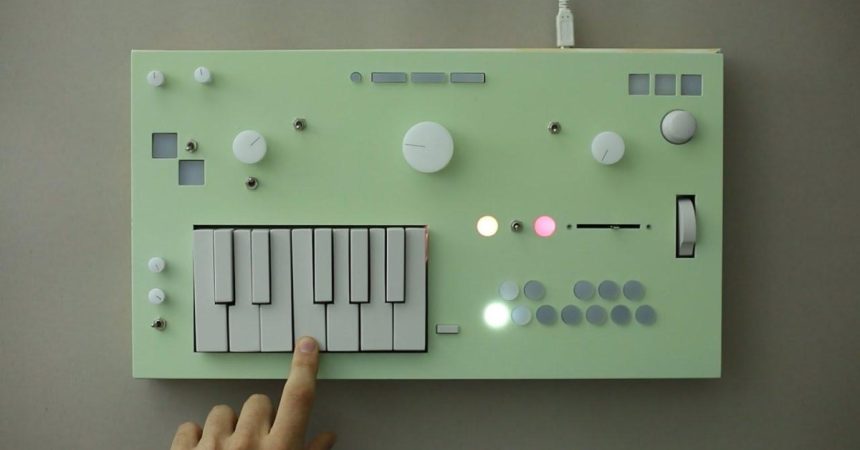
Unlike traditional synthesizers that rely on standard keyboard layouts to trigger single patches, the Nopia functions more like a specialized, drumless groovebox. It is designed to facilitate complex musical arrangements by integrating four distinct sound modules: keys, bass, arpeggiation, and pads.
The core of the instrument’s workflow revolves around three primary control interfaces:
* The Chord Builder: A compact, one-octave keyboard.
* The Tonal Selector: A 12-button array for precise key and scale management.
* The Extensions Dial: A dedicated control for shaping chord voicings.
This architecture allows musicians to execute sophisticated harmonic progressions using only one or two fingers, effectively lowering the barrier to entry for complex music theory while providing seasoned players with a rapid-fire composition tool.
Performance-Driven Features
The Nopia is not merely a static sound generator; it is built for live expression. To bridge the gap between digital synthesis and organic performance, the developers have included a “strum plate” located in the upper-right quadrant. This feature allows users to pluck individual notes from a chord, mimicking the tactile response of a stringed instrument. Furthermore, a dedicated slider enables smooth, full-chord pitch bending, adding a layer of fluidity that is often missing from rigid digital interfaces.
Synthesis, Effects, and Connectivity
Under the hood, the Nopia utilizes a hybrid engine that combines virtual analog synthesis with high-quality sample-based sounds. To polish these textures, the device comes equipped with a suite of onboard effects, including:
* Spatial Processing: Lush reverb and rhythmic delay.
* Character Shaping: Authentic tape emulation for vintage warmth.
* Dynamic Manipulation: A beat-repeat function for modern, glitch-style production.
Beyond its internal capabilities, the Nopia is designed to serve as the brain of a larger studio setup. It offers robust connectivity, most notably per-module MIDI output. This allows producers to route the Nopia’s sophisticated harmonic engine into external hardware synthesizers or software plugins, effectively turning any MIDI-compatible instrument into a Nopia-driven harmonic powerhouse.
Why the Nopia Matters
In an era where music production is increasingly dominated by DAW-based workflows, the Nopia offers a refreshing tactile alternative. By focusing on the “harmony machine” concept, it addresses a common pain point for producers: the difficulty of quickly sketching out complex, multi-layered chord structures without deep piano proficiency. With the global music production software market projected to continue its steady growth-driven by a surge in home studio adoption-innovative hardware like the Nopia is well-positioned to become a staple for both bedroom producers and professional sound designers looking to streamline their creative process.