


The Science of Slumber: My Experience Inside a High-Tech Sleep Sanctuary
“Quantum harmonics are designed to induce a state of profound tranquility,” my therapist, Kevina, explains. While the terminology feels slightly abstract, I am eager to embrace the process. I find myself reclined on a specialized, water-filled treatment bed that glows softly, tucked away beneath a vaulted ceiling in a dim, sanctuary-like chamber. To ensure total sensory isolation, Kevina fits me with premium padded noise-cancelling headphones and drapes a heavy, therapeutic blanket over my body to ground my nervous system.
A Deep Dive into Restorative Recovery
With a soft-spoken promise to return in half an hour, she lowers the ambient lighting and exits the room, leaving me in total solitude. Almost immediately, a sequence of ethereal, rhythmic soundscapes begins to play, synchronized with subtle, oscillating vibrations emanating from the bed. The sensation is initially surreal, yet it quickly transitions into a state of pure, unadulterated bliss. My memory of the session fades within minutes; when Kevina gently rouses me, I feel as though I have just emerged from a restorative, multi-hour slumber. For someone who frequently struggles to sleep, this level of rapid, deep relaxation feels like a genuine breakthrough.
The Future of Hospitality: The Sleep Lab Concept
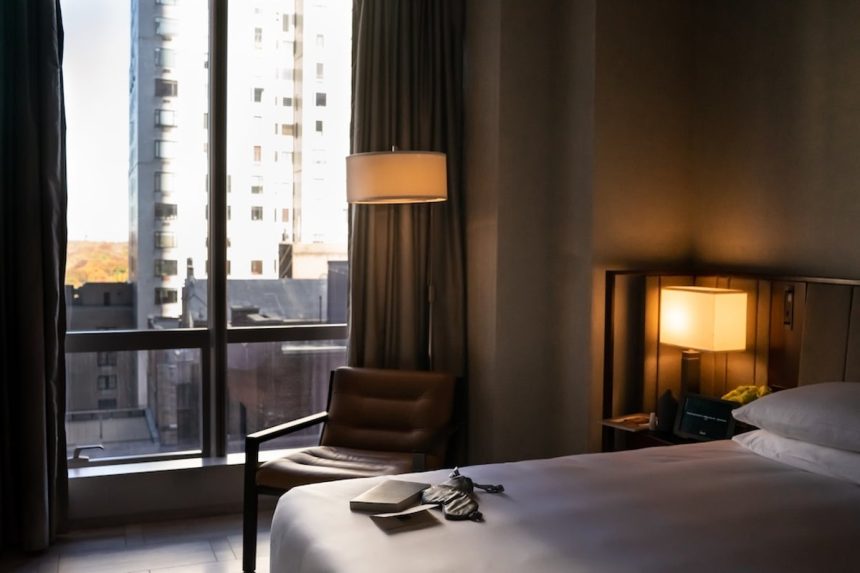
This immersive experience took place during a curated, two-night wellness retreat at the Equinox Hotel New York. The property is pioneering the “sleep lab” model, a trend gaining traction as global wellness tourism shifts toward clinical-grade recovery. According to recent data from the Global Wellness Institute, the sleep economy is now valued at over $500 billion, reflecting a growing public awareness that quality rest is the ultimate luxury. By integrating bio-hacking technology with traditional hospitality, these hotels are moving beyond simple comfort to offer guests a measurable improvement in their physiological recovery.