




## Meta Expands Threads Ecosystem to Quest and Smart Glasses
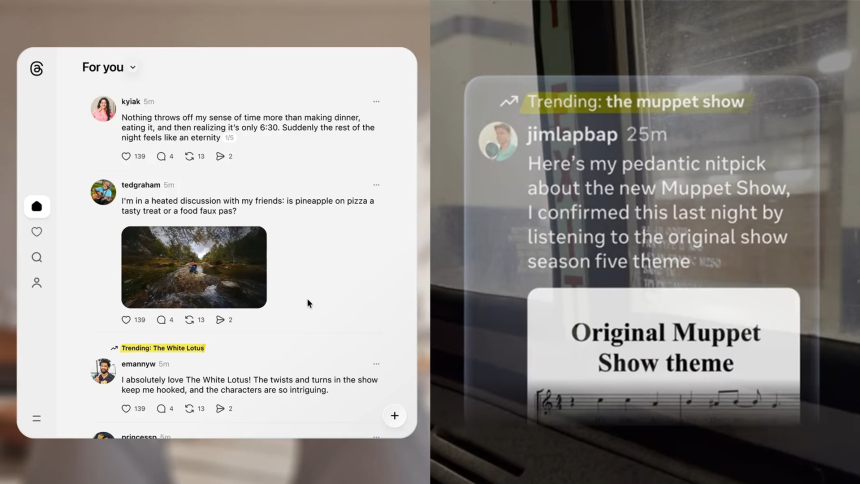
Meta is aggressively integrating its social platform, Threads, deeper into its hardware lineup. The company recently rolled out dedicated experiences for both Meta Quest headsets and its Ray-Ban smart glasses, signaling a strategic push to make the text-based app a staple of its wearable ecosystem.
### The Evolution of Meta’s Social Challenger
Debuting roughly three years ago, Threads was positioned as Meta’s direct answer to X (formerly Twitter) following the platform’s acquisition by Elon Musk. While Threads has successfully mirrored X’s user growth-boasting nearly identical active user counts-it continues to face challenges in capturing the same density of political discourse and high-level intellectual debate that defines its competitor. Despite this, Meta remains committed to scaling the platform by leveraging its massive hardware install base.
### Bringing Threads to Virtual Reality
In a move to boost engagement, Meta introduced a native Threads client on the Meta Horizon Store this past August. To ensure immediate visibility, the company opted for a controversial distribution strategy: the app was force-downloaded as a preinstalled utility on the vast majority of active Quest headsets.
While users previously had the option to access the platform via the built-in web browser, the dedicated application provides a more polished, immersive interface tailored for VR navigation. However, the decision to bypass user consent for the installation sparked significant backlash within the Quest community, with many owners expressing frustration over the unsolicited addition to their device storage.
### Why the Push for Wearable Integration?
This update is part of a broader initiative to transform Meta’s hardware from standalone gaming devices into comprehensive social hubs. By embedding Threads into the Quest and Ray-Ban smart glasses, Meta is betting that users want to consume real-time updates and social feeds without reaching for their smartphones.
As of late 2024, Meta’s strategy reflects a “platform-first” approach, aiming to keep users within the Meta ecosystem regardless of whether they are in a virtual environment or navigating the physical world with AR-enabled eyewear. Whether this forced integration will translate into long-term user retention or simply alienate power users remains to be seen.