




Enhancing Recall: Apple’s New Audio Intelligence Tools for Wearables
Beyond monitoring your daily step count, heart rate variability, and sleep cycles, your Apple wearable is evolving into a cognitive assistant. The tech giant is currently exploring ways to help users capture and recall spoken information in real-time. While the prospect of having a microphone-equipped device constantly “listening” to your surroundings may spark debate regarding privacy, the utility of these tools could redefine how we manage daily interactions.
The Arrival of Audio Intelligence
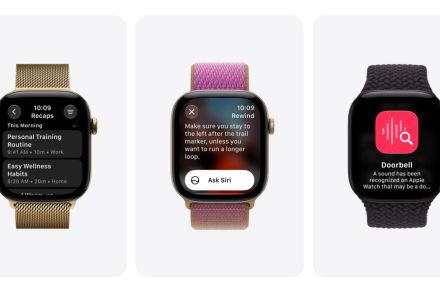
Apple has officially launched beta testing for two sophisticated features: Live Rewind and Siri Recap. These Audio Intelligence capabilities are designed specifically for the Apple Watch Series 12 and the Apple Watch Ultra 4.
These updates are currently rolling out to developers via the iOS 27.3 beta, which became available on November 3, 2026. General users interested in testing these features can likely expect a public beta release by mid-December.
How Live Rewind and Siri Recap Function
The core philosophy behind these tools is to provide a “safety net” for your memory without requiring constant manual recording.
* Live Rewind: This feature acts as a short-term buffer for your ears. By performing a double-press on the Digital Crown, the watch instantly displays the previous 15 seconds of conversation as transcribed text. To ensure discretion, the device utilizes a subtle haptic chime and a visual animation, allowing the user to access the information without alerting others in the room.
* Contextual Interaction: Once the text is captured, users aren’t just limited to reading it. You can prompt the watch to summarize the snippet, extract key action items, or save the transcription directly into the Siri app for future reference.
Privacy and the Future of Wearable Memory
As AI integration becomes more prevalent in consumer electronics, Apple is emphasizing that these features are built with a “privacy-first” architecture. By processing audio locally on the device rather than relying on cloud-based servers, the company aims to mitigate concerns about sensitive data exposure.
For context, recent industry data suggests that over 60% of wearable users are interested in AI-driven productivity tools, provided that data encryption remains a top priority. Much like how a digital calendar replaced the physical pocket planner, these new tools aim to replace the “mental sticky note,” ensuring that important details-like a quick instruction from a colleague or a fleeting thought-are never truly lost.