


Forefront Expands Tactical Gameplay with Operation: Sandstorm Update
Triangle Factory has officially rolled out a significant content expansion for its large-scale VR shooter, Forefront. Titled “Operation: Sandstorm,” this update introduces a suite of tactical enhancements, hardware integrations, and technical optimizations designed to deepen the immersion of its battlefield combat.
Introducing the Breakthrough Game Mode
The centerpiece of this update is the debut of “Breakthrough,” a high-stakes attack-and-defend game mode. In this format, the offensive team is tasked with systematically seizing every control point within a specific sector before they can advance to the next phase of the map. Conversely, the defensive squad must coordinate their efforts to fortify these positions and stall the enemy’s momentum.
Players can experience this new tactical challenge across four distinct maps: Tunnels, Siberia, Mauritania, and Fjord. This mode shifts the focus from chaotic skirmishes to structured, objective-based warfare, requiring teams to communicate more effectively to secure victory.
Arsenal Upgrades and Hardware Integration
To keep the combat fresh, Triangle Factory has expanded the player’s loadout options. The update adds a new rifle, providing more versatility for mid-to-long-range engagements, alongside a knife for those who prefer a stealthier, close-quarters approach. These additions are intended to balance the meta and offer players more strategic choices during intense firefights.
Furthermore, the developers have deepened the game’s sensory experience by adding native support for bHaptics accessories. This integration allows players to physically feel the impact of incoming fire and environmental explosions, significantly heightening the sense of presence within the virtual environment.
Technical Refinements for Steam Frame
Beyond gameplay mechanics, the October 29 update notes highlight a technical shift regarding Valve’s Steam Frame. The team has implemented improved foveated rendering, a technique that optimizes performance by focusing graphical processing power on the area where the player is directly looking.
While the developers have not provided specific frame-rate metrics or comparative benchmarks, this adjustment is a welcome step toward smoother performance. Players should view this as a quality-of-life improvement rather than a radical visual overhaul, though it reflects the studio’s ongoing commitment to optimizing the VR experience for a wider range of hardware configurations.
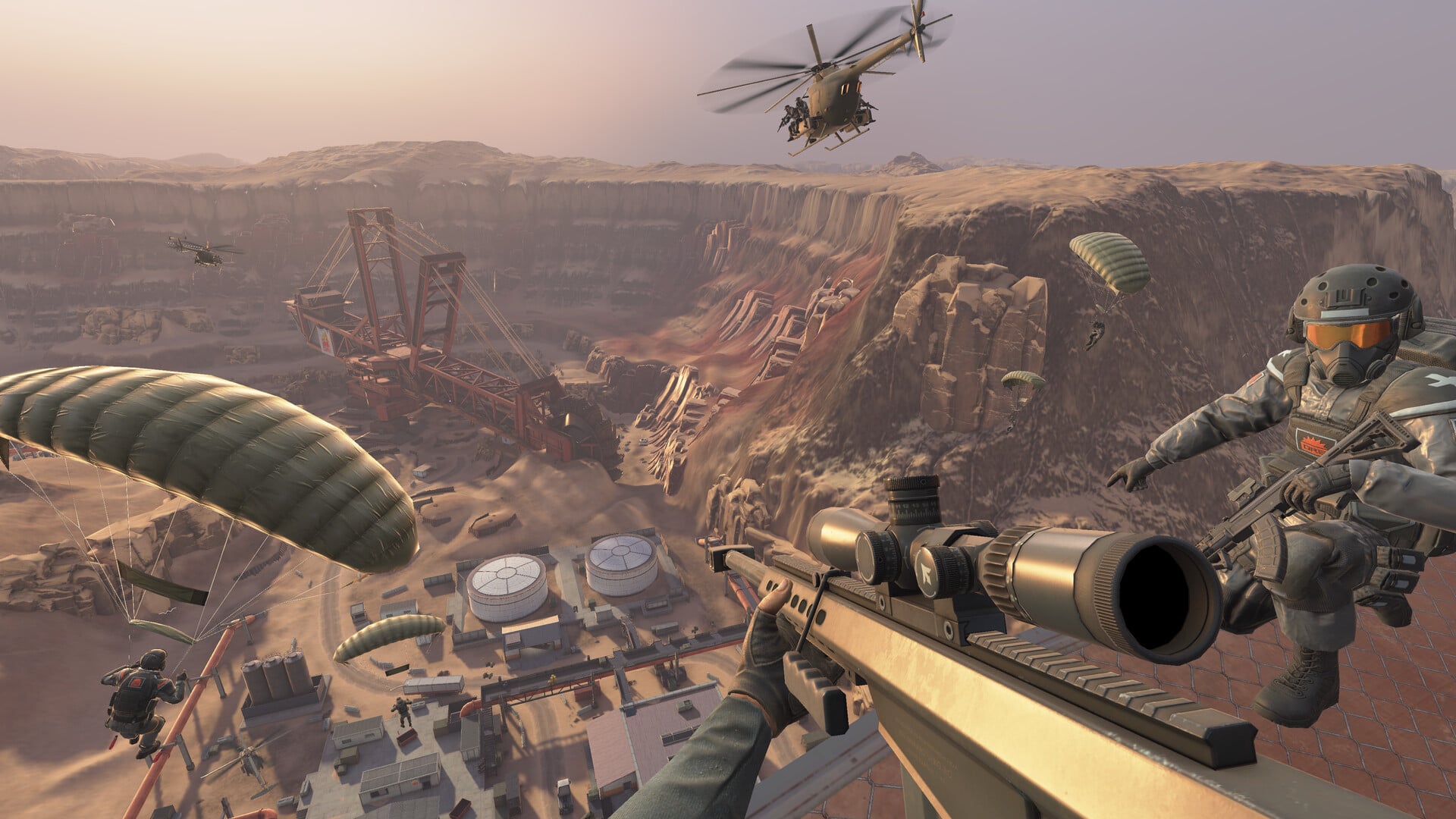
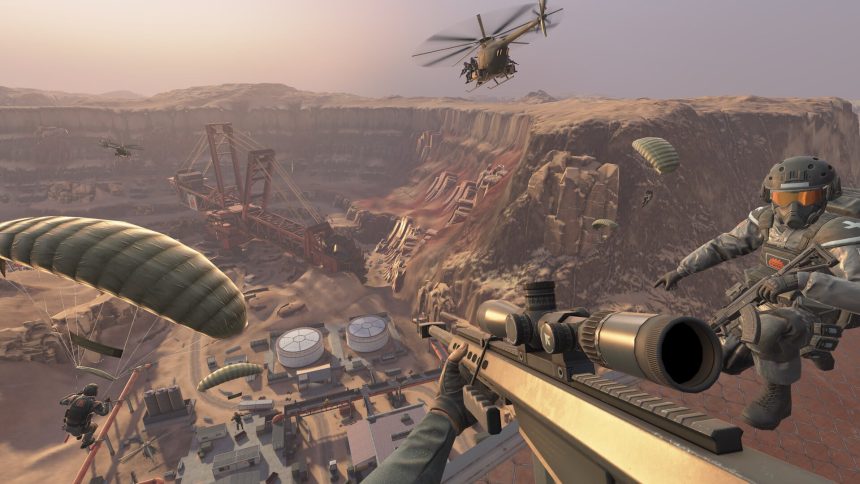
Official Forefront game image from Triangle Factory.