



Is the Pixel Watch 5 Stagnating? Why Google’s Hardware Strategy Remains Conservative
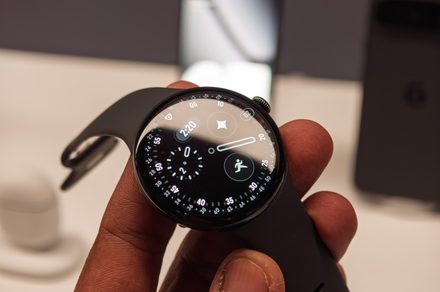
Recent leaks surrounding the upcoming Pixel Watch 5 suggest that Google is prioritizing consistency over radical innovation. While fans often hope for a generational leap in processing power, evidence indicates that the tech giant is opting for a familiar internal architecture, potentially keeping the same silicon that has powered its wearables for years.
The “Godric” Leak: Familiar Silicon Under the Hood
According to a recent Google Play Console listing, the device-internally codenamed “godric”-appears to rely on the same Qualcomm platform found in the Pixel Watch 4.
Technical specifications pulled from the listing reveal the use of the SW5100 platform, featuring a quad-core Cortex-A53 CPU clocked at 1.7GHz and an Adreno 702 GPU. For those tracking the evolution of wearable tech, this hardware configuration is essentially a holdover from the Snapdragon W5+ Gen 1, which first hit the market in 2022.
While the Pixel Watch 5 is expected to look almost identical to last year’s model, the decision to retain the same CPU and GPU architecture suggests that Google is comfortable with the current performance ceiling of its wearable ecosystem.
Incremental Upgrades vs. Industry Trends
While the core processing power remains stagnant, the Pixel Watch 5 is rumored to receive a boost in memory, with reports pointing toward an increase to 3GB of RAM. This shift could provide a smoother multitasking experience, even if the underlying chipset remains unchanged.
This conservative approach stands in stark contrast to competitors like Samsung. For instance, the Galaxy Watch 9 has adopted a more aggressive hardware strategy, integrating a brand-new chipset and larger battery capacities to justify its premium price point. By comparison, Google’s strategy mirrors a “refinement” phase rather than a “reinvention” phase.
Why Google Might Be Playing It Safe
It is important to note that the Snapdragon W5+ Gen 2, which debuted in 2025, was never intended to be a massive leap in raw processing speed. Instead, that platform focused on:
* Enhanced Power Efficiency: Extending battery life through better power management.
* Satellite Connectivity: Integrating advanced messaging capabilities.
* Precision Tracking: Improving GPS accuracy for fitness enthusiasts.
By sticking to this established architecture, Google is likely betting that the current hardware is sufficient to handle the demands of Wear OS, allowing them to focus their engineering resources on software optimization and AI-driven health features rather than chasing higher clock speeds.
As the wearable market matures, the focus is shifting away from raw “megahertz” and toward how effectively a device can integrate into a user’s daily life. Whether this “if it isn’t broken, don’t fix it” philosophy will satisfy consumers remains to be seen.