




Beyond the Budget: How Modern Indie Studios Navigate Financial Complexity
Image credit: Spilt Milk Studios
For independent developers, the traditional concept of a “game budget” has become an outdated relic. In an era where financial stability is rarely tied to a single source, the path to production is more like a mosaic than a straight line. Nicholas Lovell of Spilt Milk Studios recently reflected on this evolution, highlighting how studios must now juggle diverse revenue streams to survive and scale in a volatile market.
The “Trash Goblin” Turning Point: A Lesson in Resilience
The journey of Trash Goblin, Spilt Milk’s cozy shop simulation title, serves as a masterclass in the necessity of financial agility. Three years ago, the studio faced a dire existential crisis. After being rejected by 74 different publishers-including one high-profile instance where a deal collapsed during the final signing meeting-the team was forced to issue redundancy notices.
With the studio’s future hanging by a thread, the team pivoted to a last-ditch crowdfunding effort. The gamble paid off. Today, Trash Goblin stands as a multi-platform success, available across Steam, Epic, Xbox, PlayStation, Switch, and mobile devices, bolstered by a consistent stream of both free and premium DLC.
Rethinking the Financial Blueprint
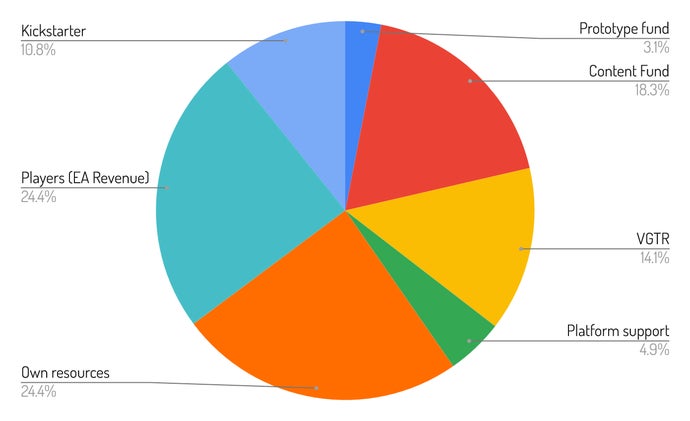
As Spilt Milk Studios prepares for its next project, a retrospective analysis of Trash Goblin’s funding revealed a surprising reality: crowdfunding accounted for a mere 10% of the total development budget. This revelation challenges the industry-standard obsession with a single, fixed “budget” figure.
In 2026, the financial landscape for indie developers is defined by:
* Hybrid Funding Models: Relying on a mix of grants, tax credits, publisher advances, and community support rather than a single “pot” of money.
* Scalable Development: Aligning the scope of production with the actual cash flow available at any given moment, rather than planning for a static, pre-determined cost.
* Post-Launch Sustainability: Viewing the initial release not as the end of the budget, but as the beginning of a long-term revenue cycle fueled by ongoing content updates.
Why the “What’s Your Budget?” Question is Obsolete
Asking a developer for their total budget is no longer a meaningful metric. Because modern studios scale their development efforts in real-time based on incoming revenue-much like how a startup might adjust its burn rate based on monthly recurring revenue-the “budget” is a fluid, ever-changing number.
For developers, the goal is no longer to secure a lump sum to finish a game; it is to build a sustainable ecosystem where the game can grow alongside its community. By diversifying funding sources, studios can insulate themselves from the whims of individual publishers and create a more resilient, long-term business model.